

- RockEDU Home >
- RockEDU Research Programs >
- Student Works
Student Works
Each summer, RockEDU immerses high school and undergraduate students in authentic, mentored research. These posters showcase the science explored and the growth of students as emerging researchers.
In this research group, students explored how the immune system detects harmful invaders and coordinates a response — studying antigen-presenting cells, immunological synapses, and the different roles T cells take on to fight infection. Let’s chat! – the Cellular Handshake was led by RockEDU Fellows: Nada Terra (MSTP Student, de Lange Laboratory) and Kristel Yee Mon, PhD (Postdoctoral Fellow, Blander Laboratory).
Support Scientist Mentors
Ruth Raichur, Graduate Student, MSKCC, Rizzuto Laboratory
Ashley Sullivan, Graduate Student, MSKCC, Balachandran Laboratory
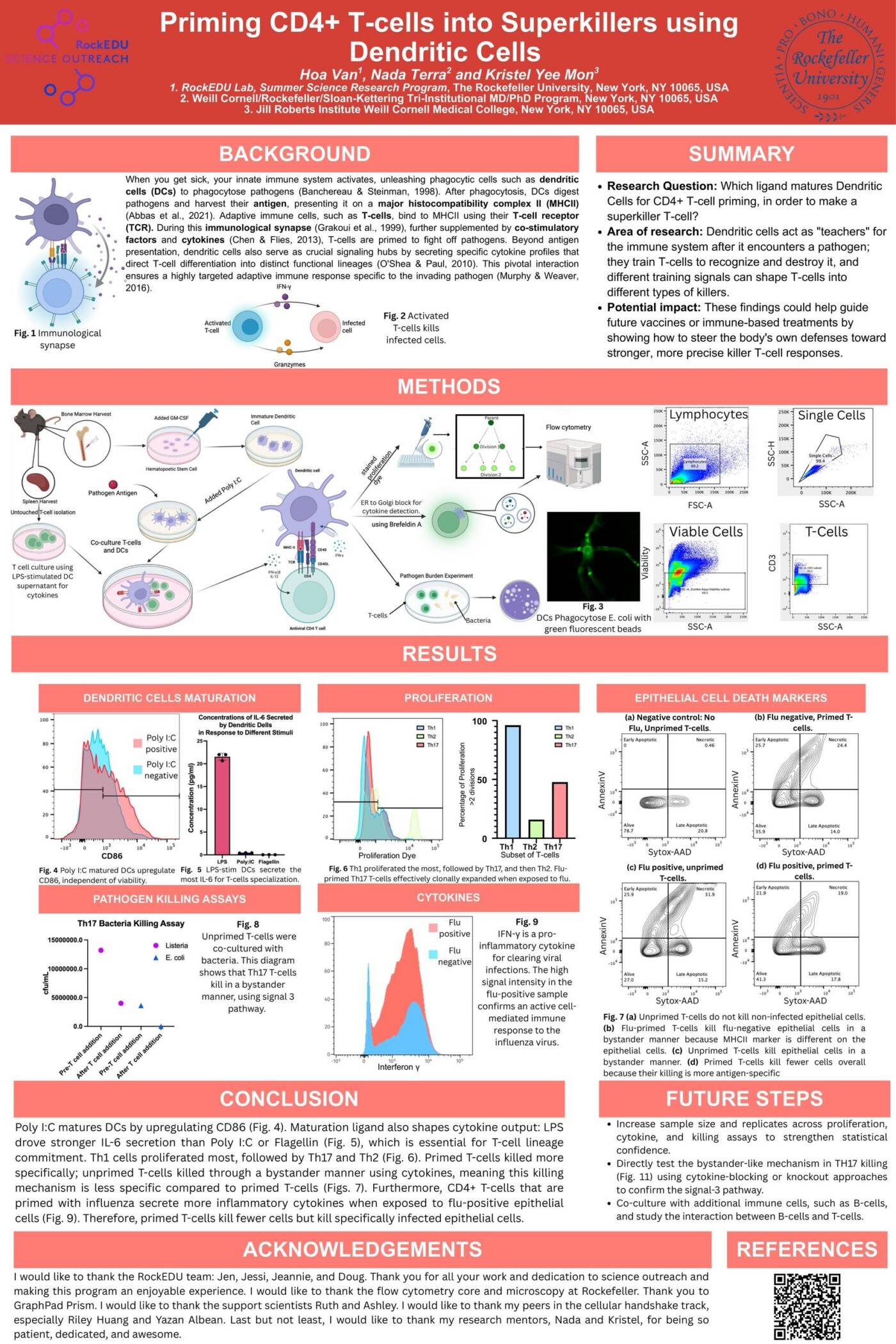
Priming CD4+ T-cells into Superkillers using Dendritic Cells
Hoa Van, Swarthmore College
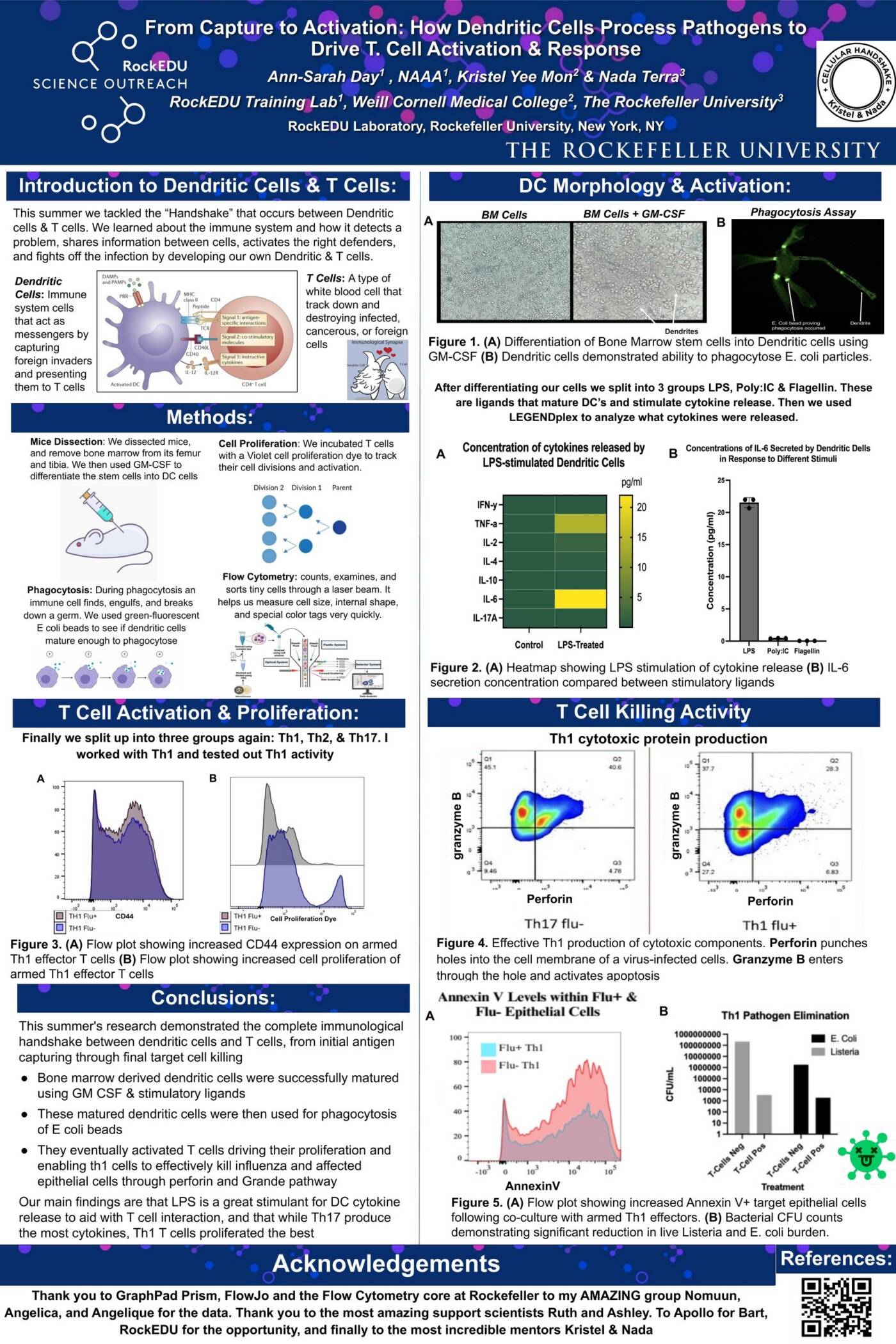
From Capture to Activation: How Dendritic Cells Process Pathogens to Drive T. Cell Activatipn & Response
Ann-Sarah Day, Uncommon Prep Charter High School
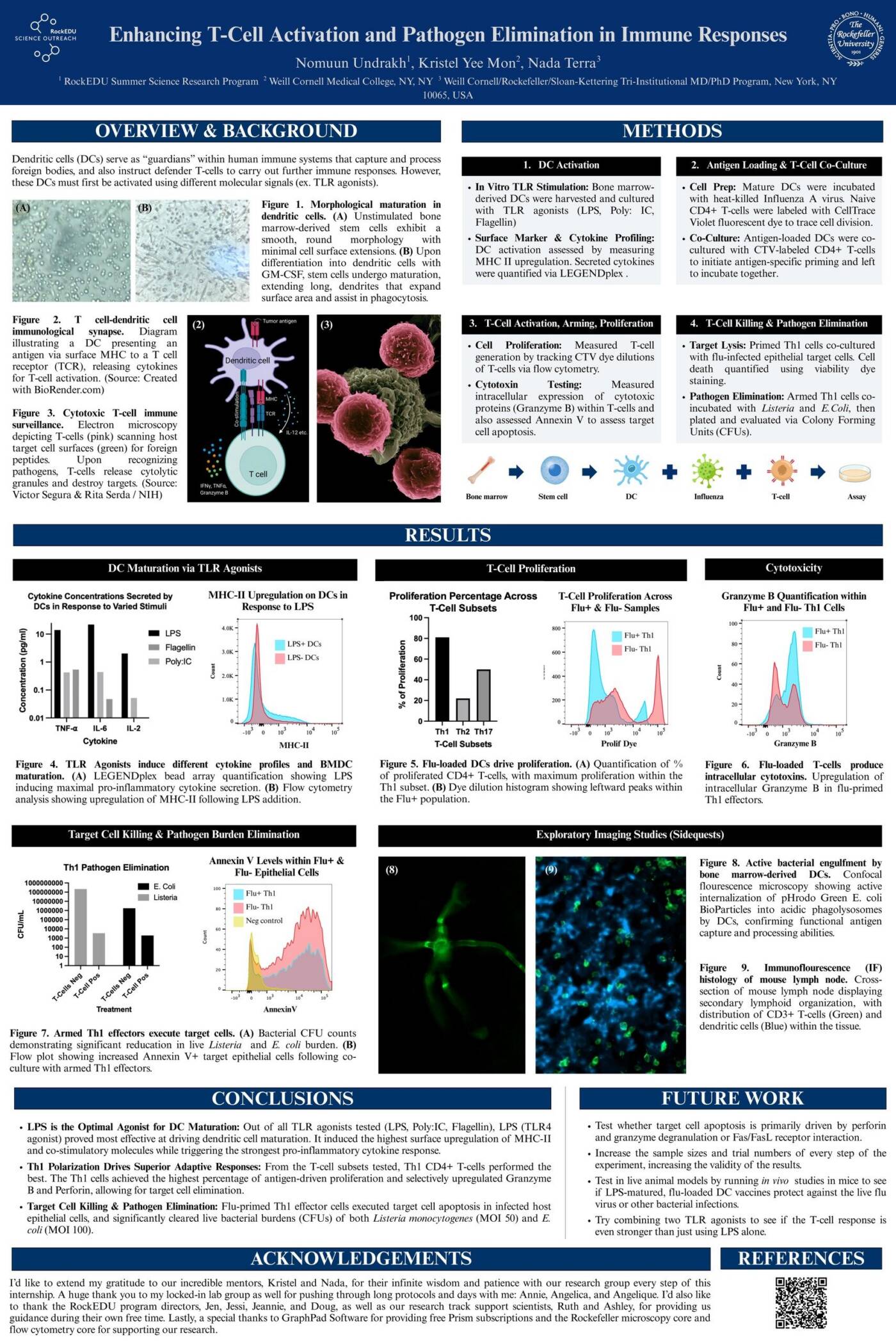
Enhancing T-Cell Activation and Pathogen Elimination in Immune Responses
Nomuun Undrakh, Columbia University
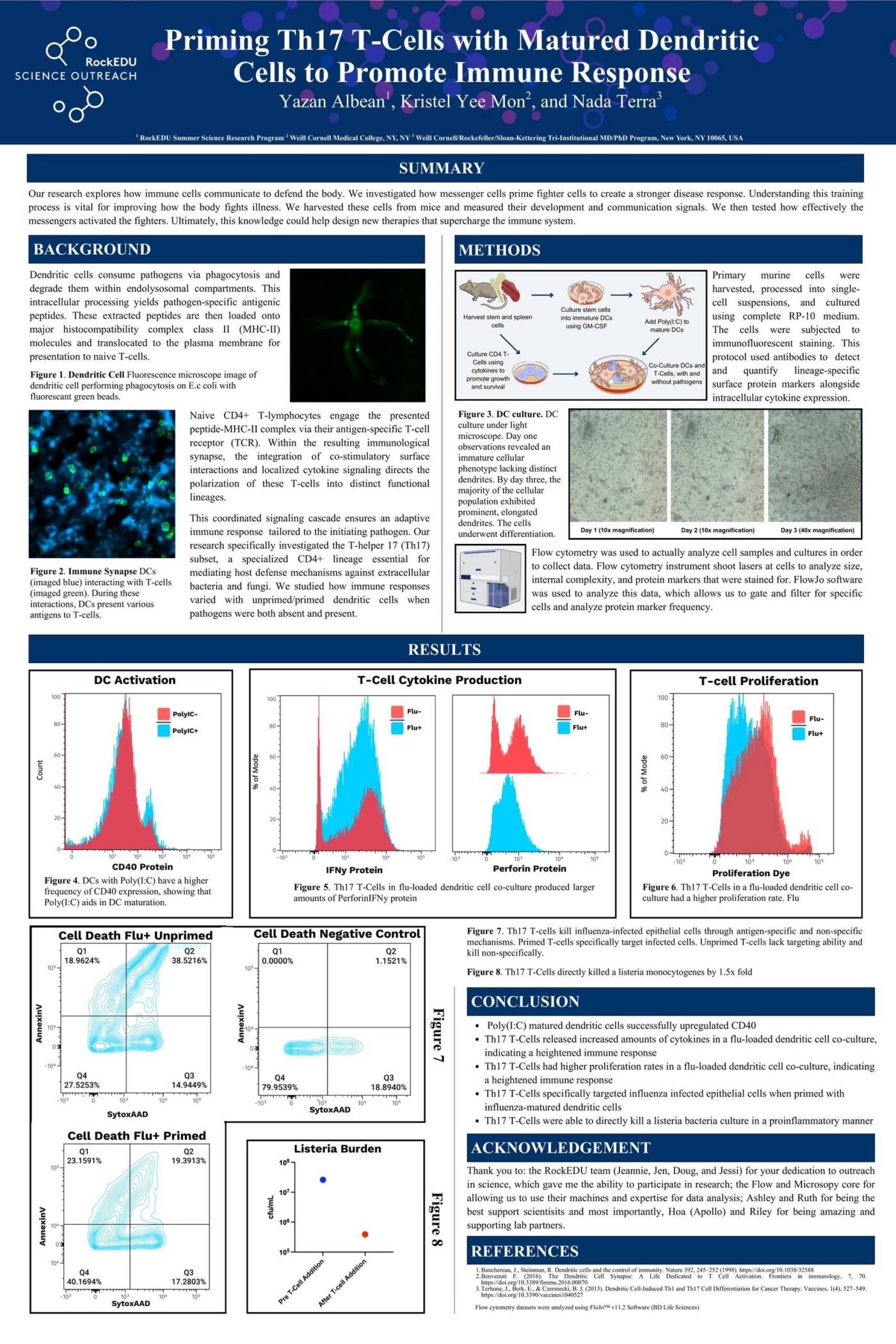
Priming Th17 T-Cells with Matured Dendritic Cells to Promote Immune Response
Yazan Albean, Rutgers University - Newark
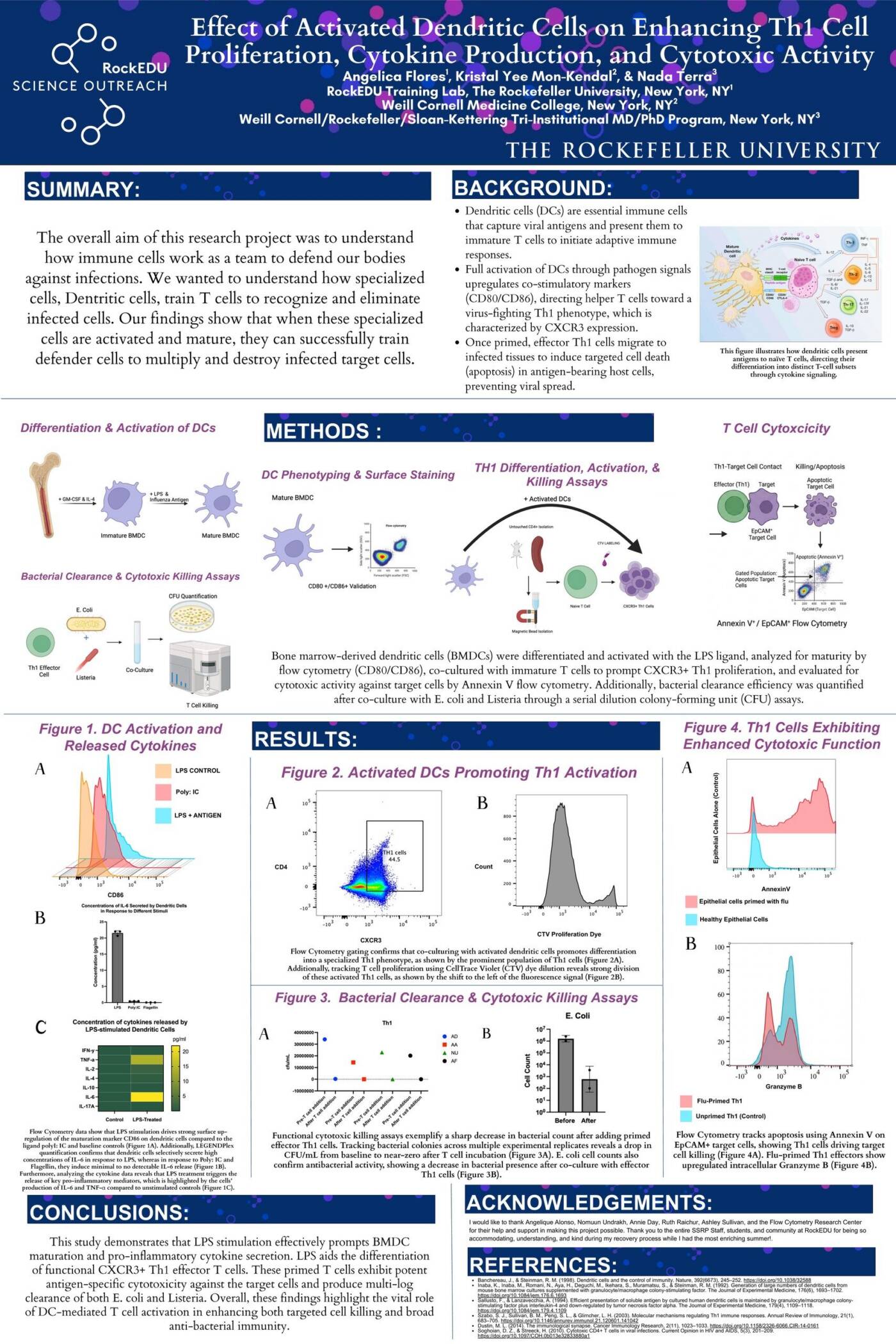
Effect of Activated Dendritic Cells on Enhancing TH1 Cell Proliferation, Cytokine Production, and Cytotoxic Activity
Angelica Flores, Hunter College
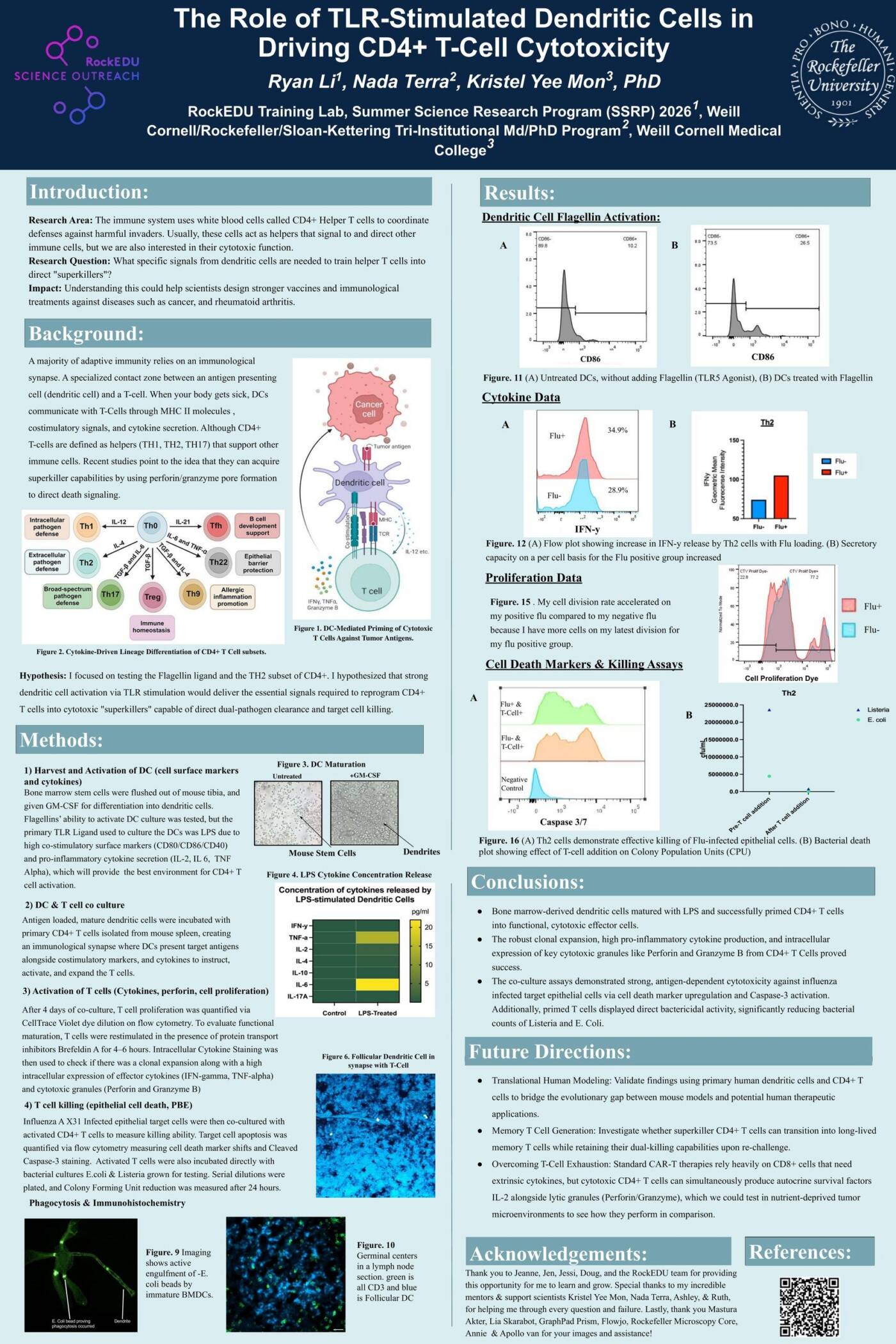
The Role Of TLR-Stimulated Dendritic Cells in Driving CD4+ T-Cell Cytotoxicity
Ryan Li, Forest Hills High School
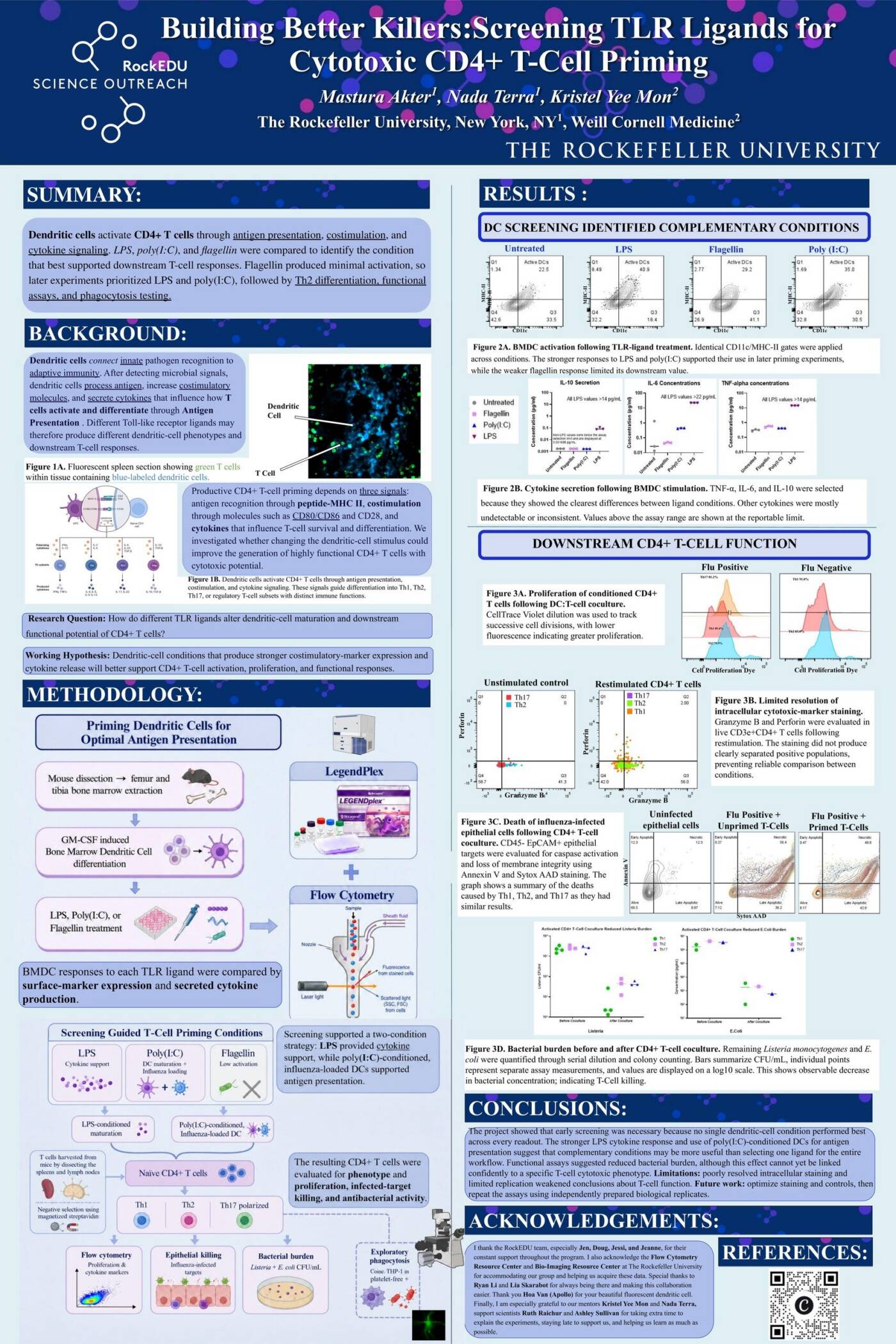
Building Better Killers: Screening TLR Ligands for Cytotoxic CD4+ T-Cell Priming
Mastura Akter, Hillcrest High School
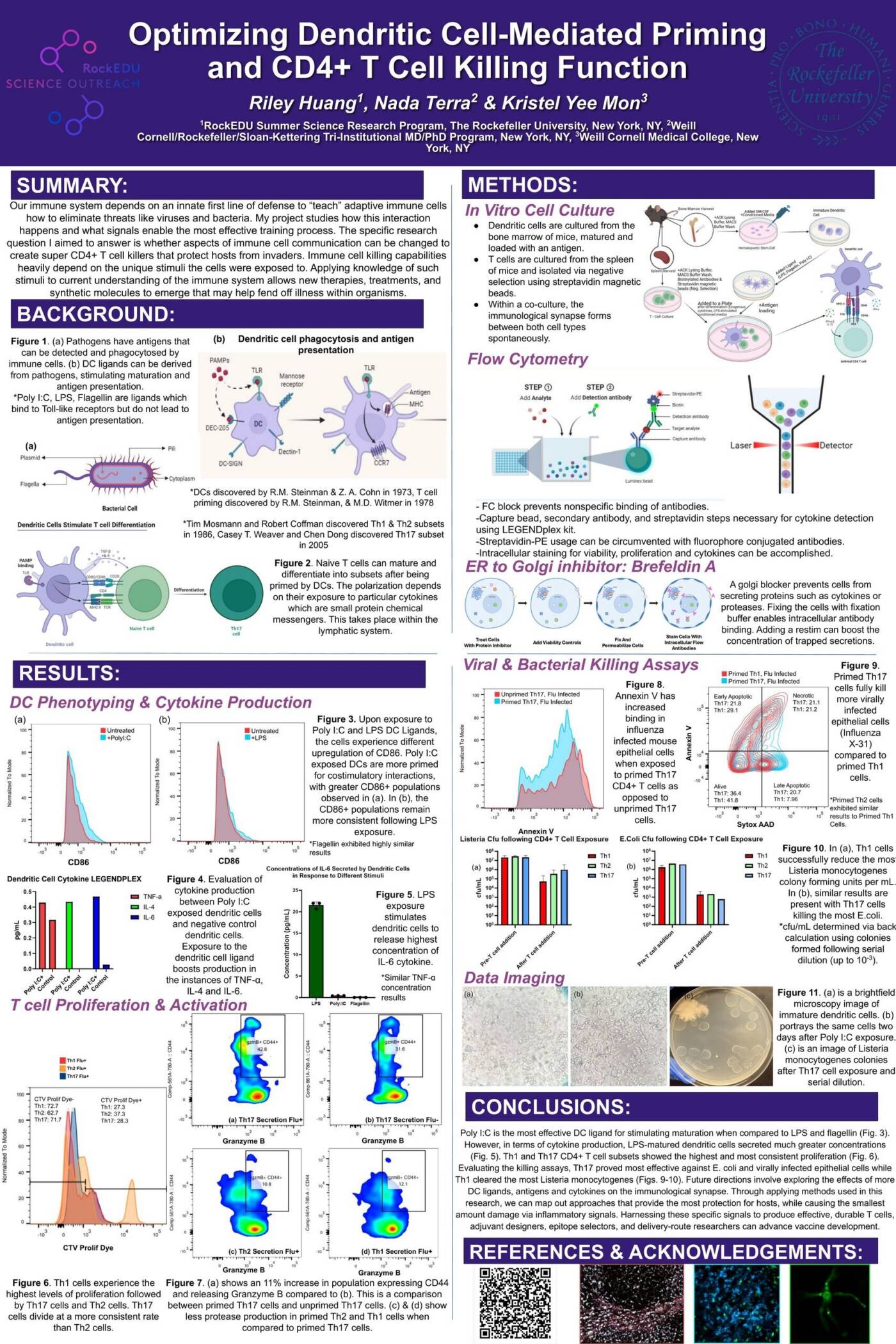
Optimizing Dendritic Cell-Mediated Priming and CD4+ T Cell Killing Function
Riley Huang, Hunter College
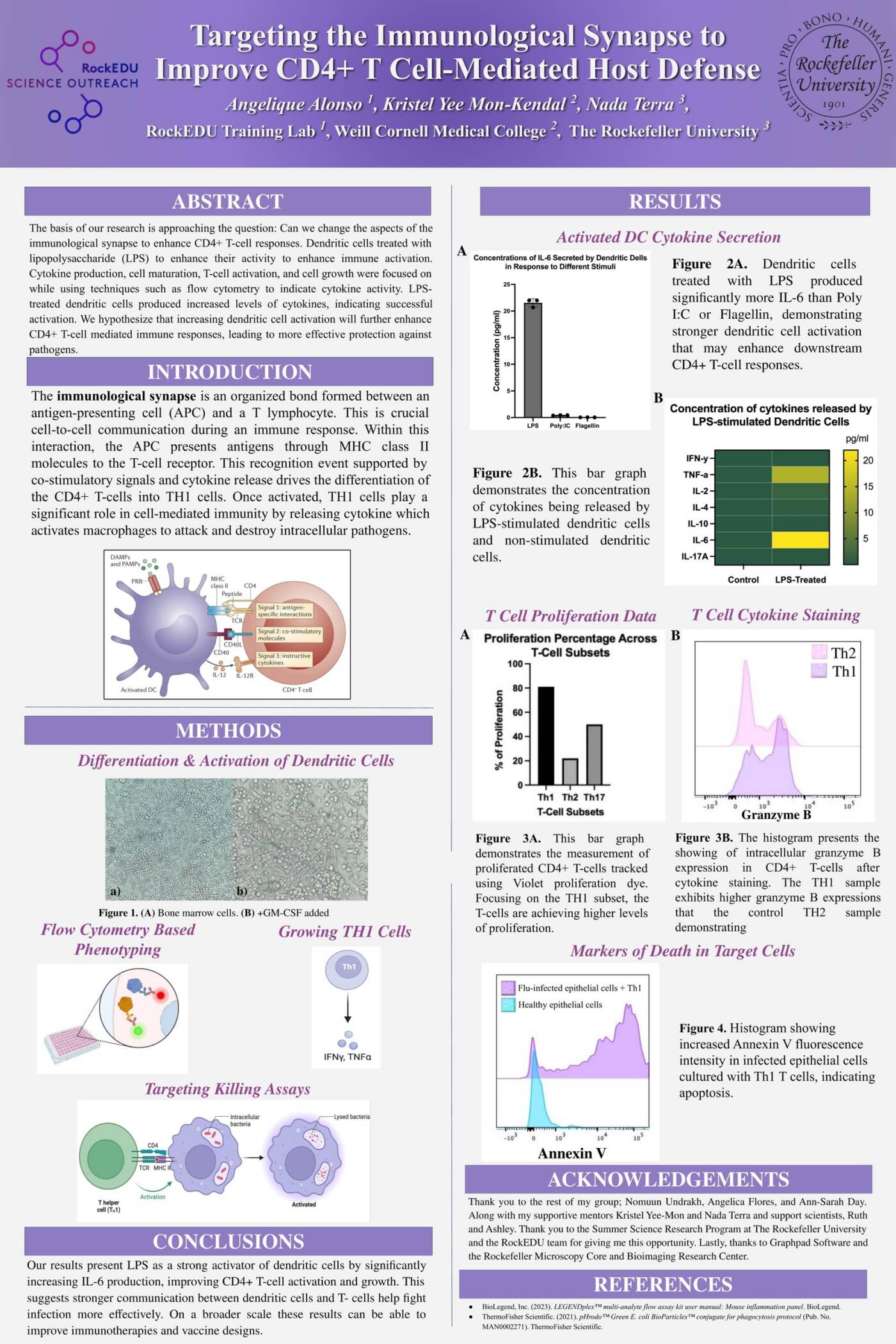
Targeting the Immunological Synapse to Improve CD4+ T Cell-Mediated Host Defense
Angelique Alonso, Bard High School Early College
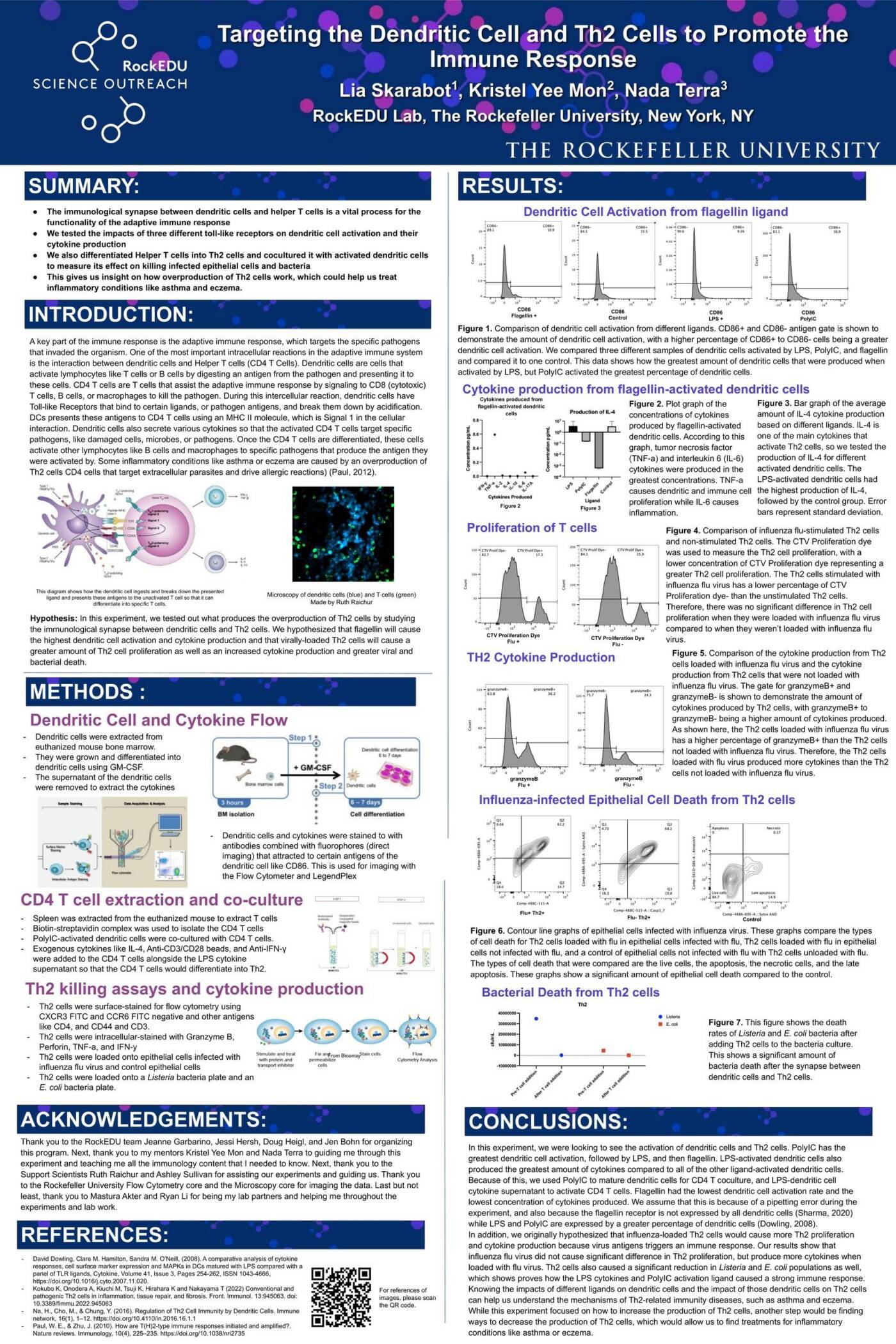
Targeting the Dendritic Cell and TH2 Cells to Promote the Immune Response
Lia Skarabot, Bronx High School of Science
In this research group, students collected samples from New York City waterways using opportunistic sample collection methods, then applied DNA clean-up and downstream molecular biology techniques like PCR and sequencing to study local biodiversity. They also explored the history of citizen science, how participatory research lets communities "think globally, act locally" in environmental conservation, and the complexity of species interactions in the local environment. The Biodiver-city of NY Waterways was led by RockEDU Fellows: Brigid Maloney, PhD (Postdoctoral Fellow, Jarvis Laboratory) and Madison Weber, PhD, (Postdoctoral Fellow, Romesser Laboratory)
Support Scientist Mentors
Heloise Carion, Graduate Student, RU, Marraffini Laboratory
Roksana Azad, Postdoctoral Fellow, MSKCC, Keeney Laboratory
Jiayi Fan, Research Associate, MSKCC, Zhao Laboratory
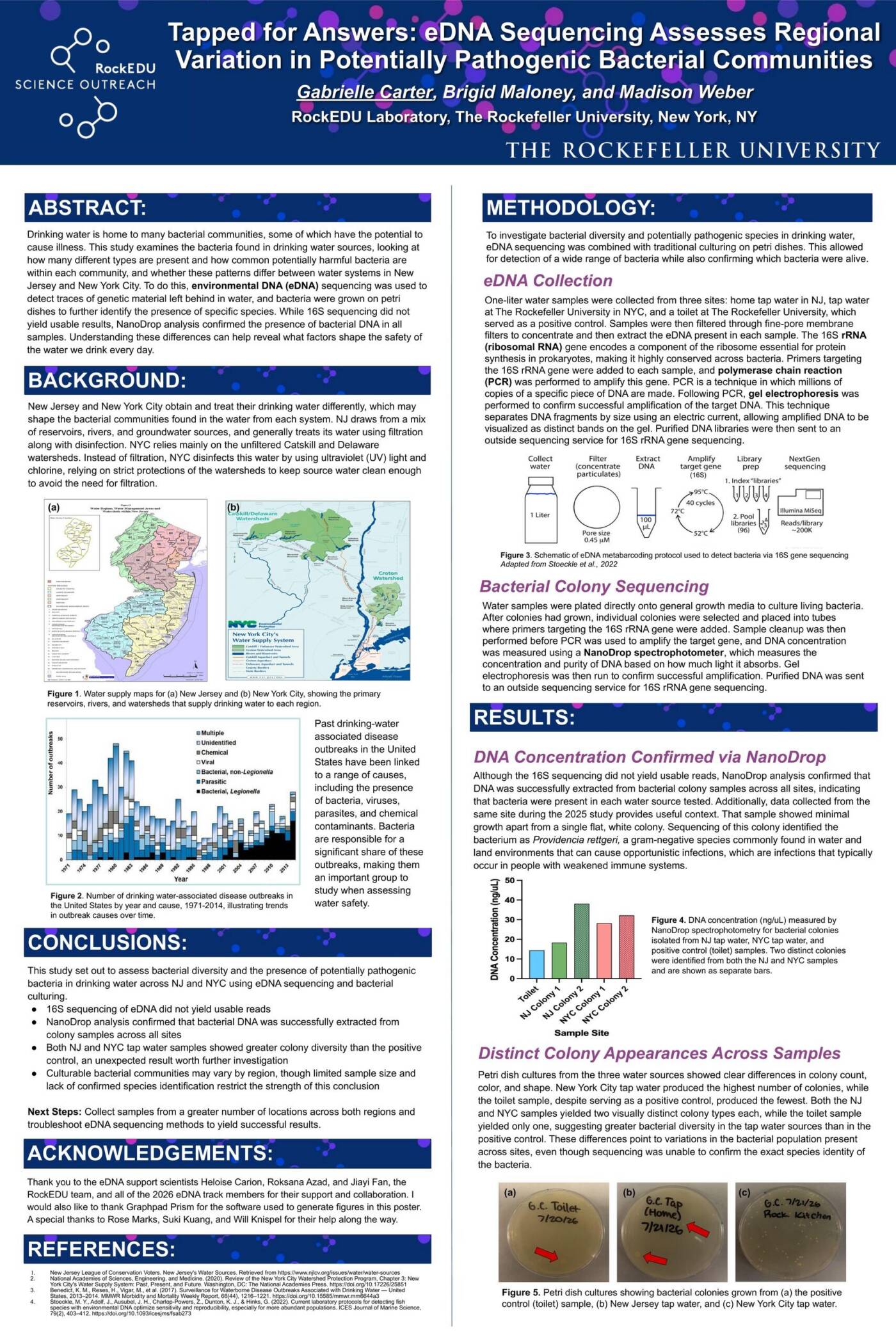
Tapped for Answers: eDNA Sequencing Assesses Regional Variation in Potentially Pathogenic Bacterial Communities
Gabrielle Carter, Academy for Allied Health Sciences
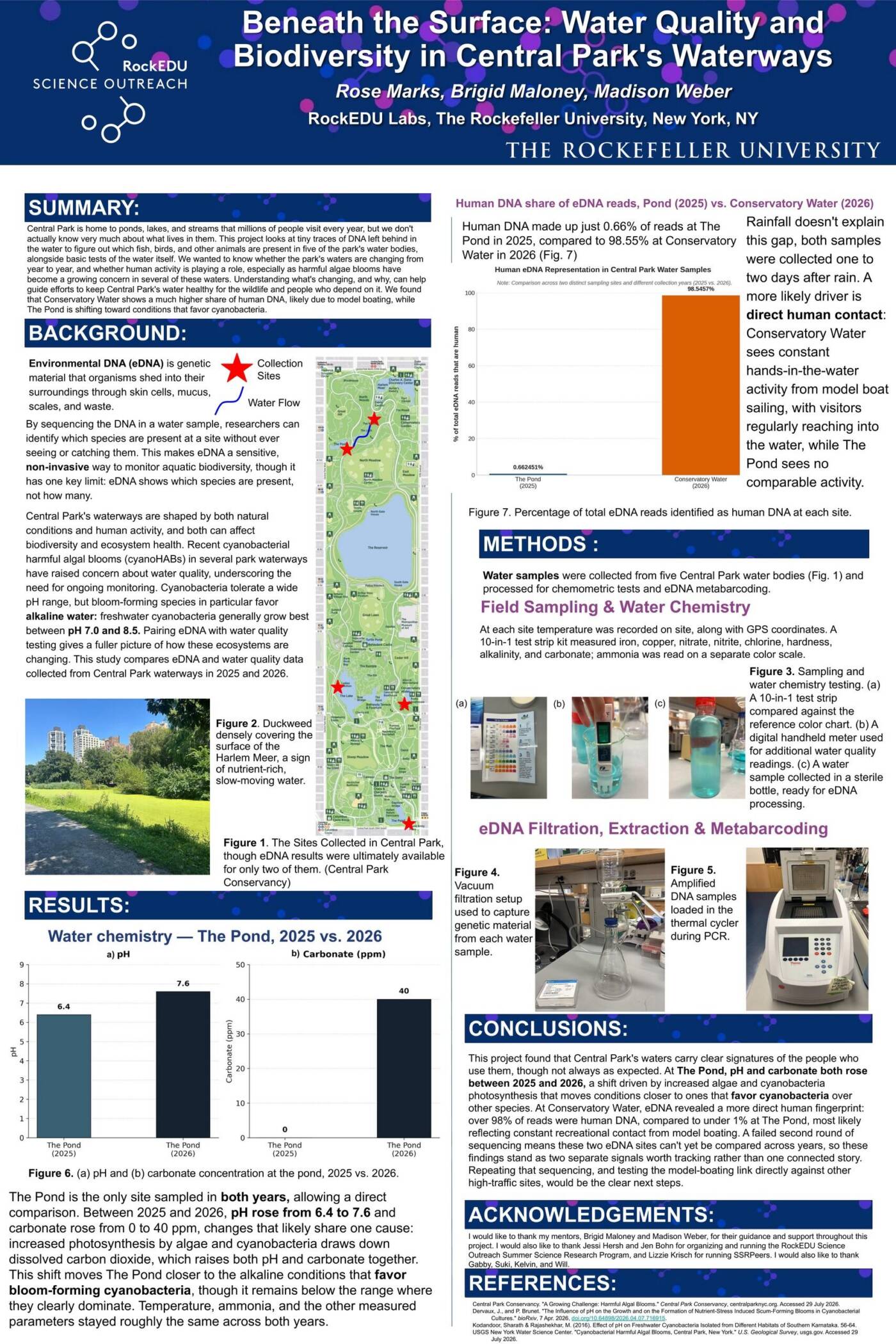
Beneath the Surface: Water Quality and Human Impact on Central Park's Waterways
Rose Marks, Vestal Senior High School
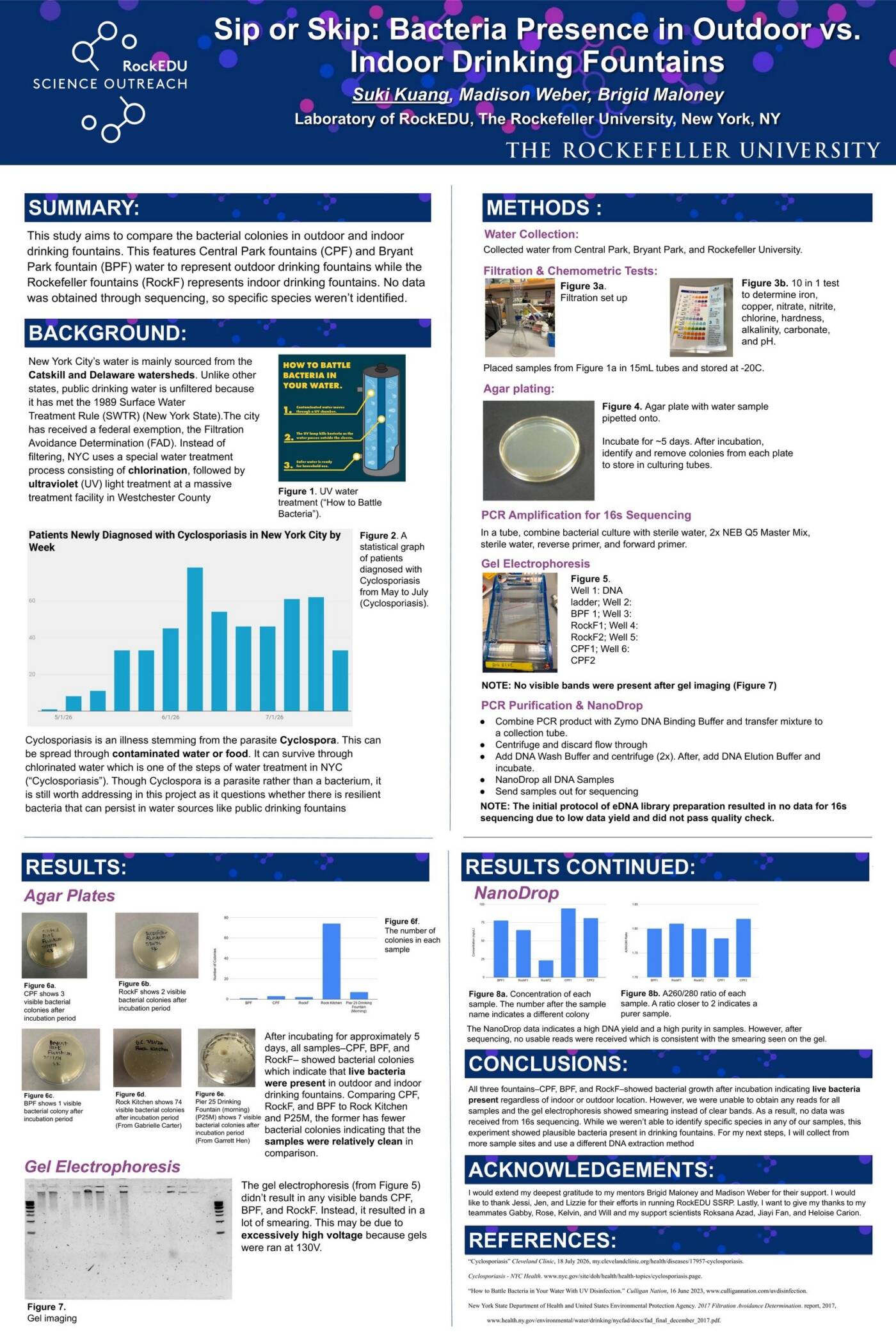
Sip or Skip: Bacteria Presence in Outdoor vs. Indoor Drinking Fountains
Suki Kuang, New Explorations into Science, Technology and Math School
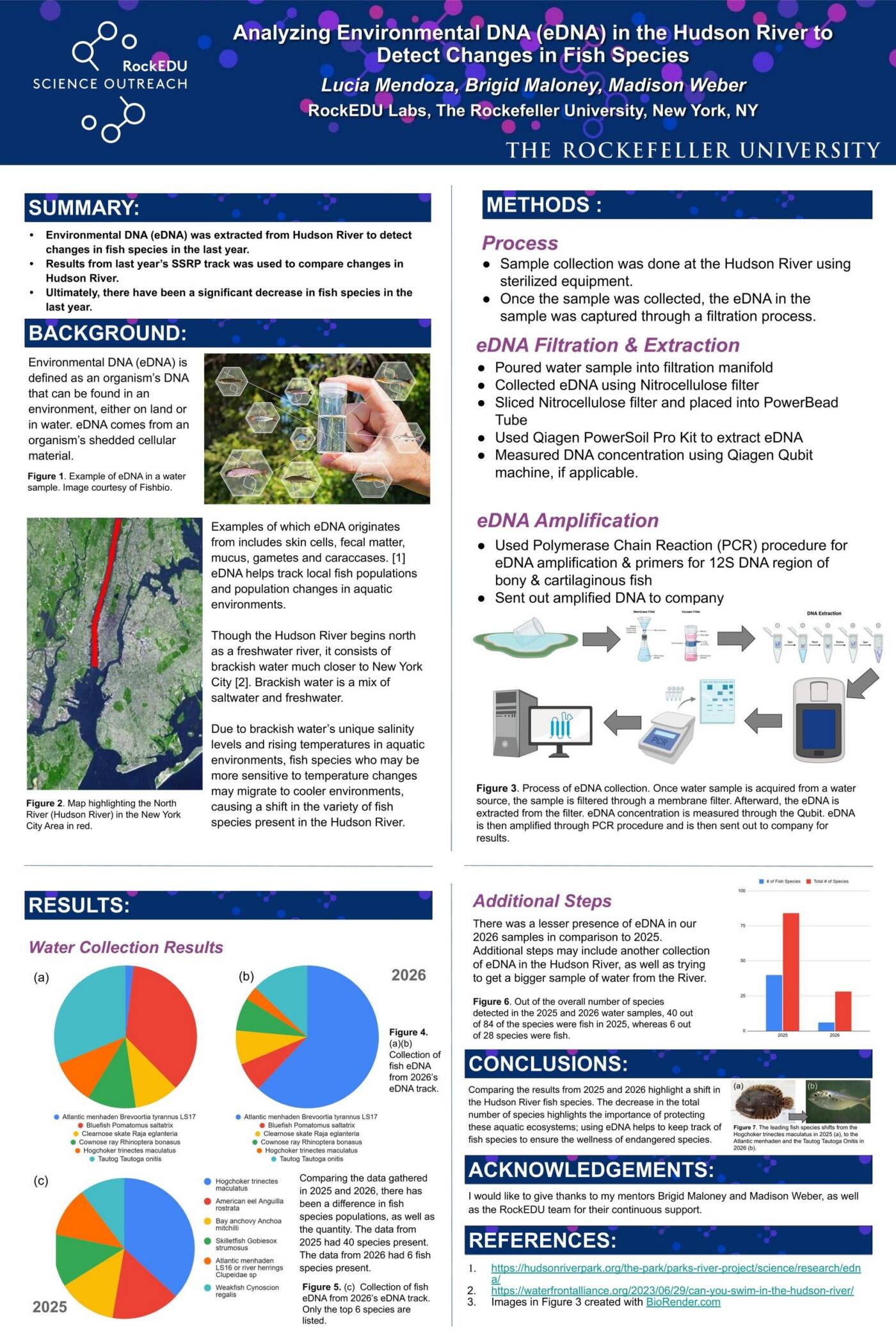
Analyzing Environmental DNA (eDNA) in the Hudson River to Detect Changes in Fish Species
Lucia Mendoza, New York University
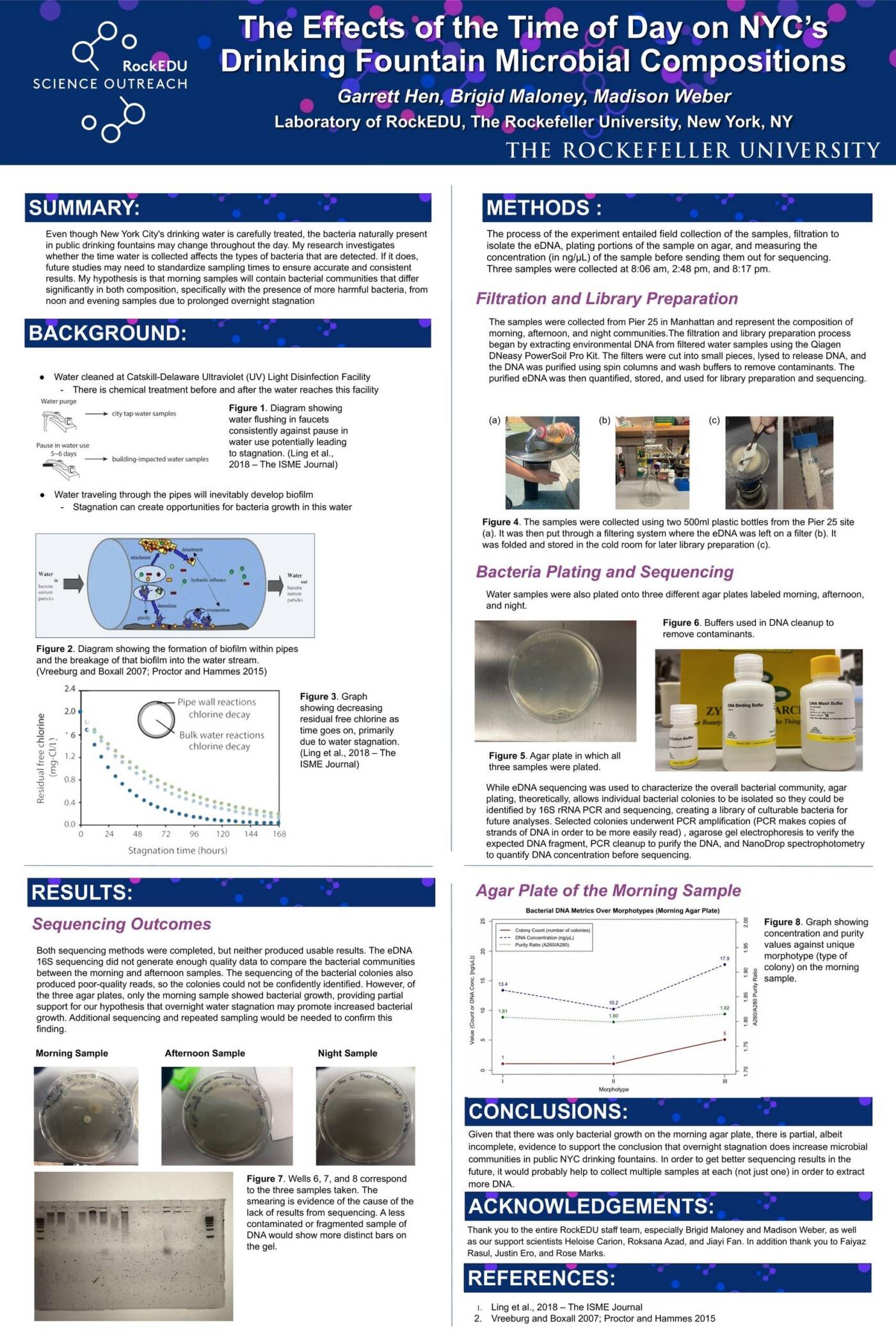
The Effects of the Time of Day on NYC’s Drinking Fountain Microbial Communities
Garrett Hen, Fordham Preparatory School
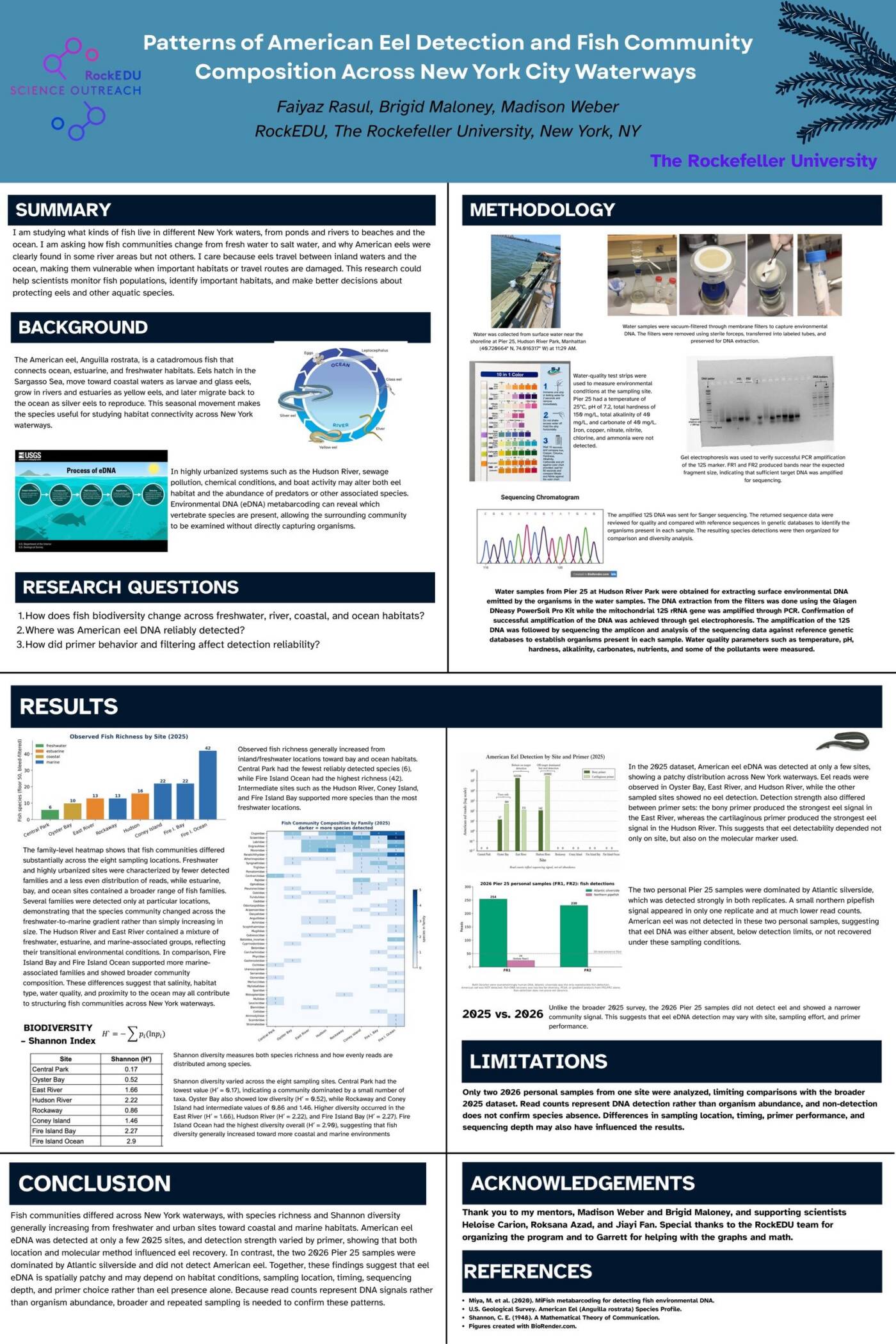
Patterns of American Eel Detection and Fish Community Composition Across New York City Waterways
Faiyaz Rasul, Brooklyn International High School
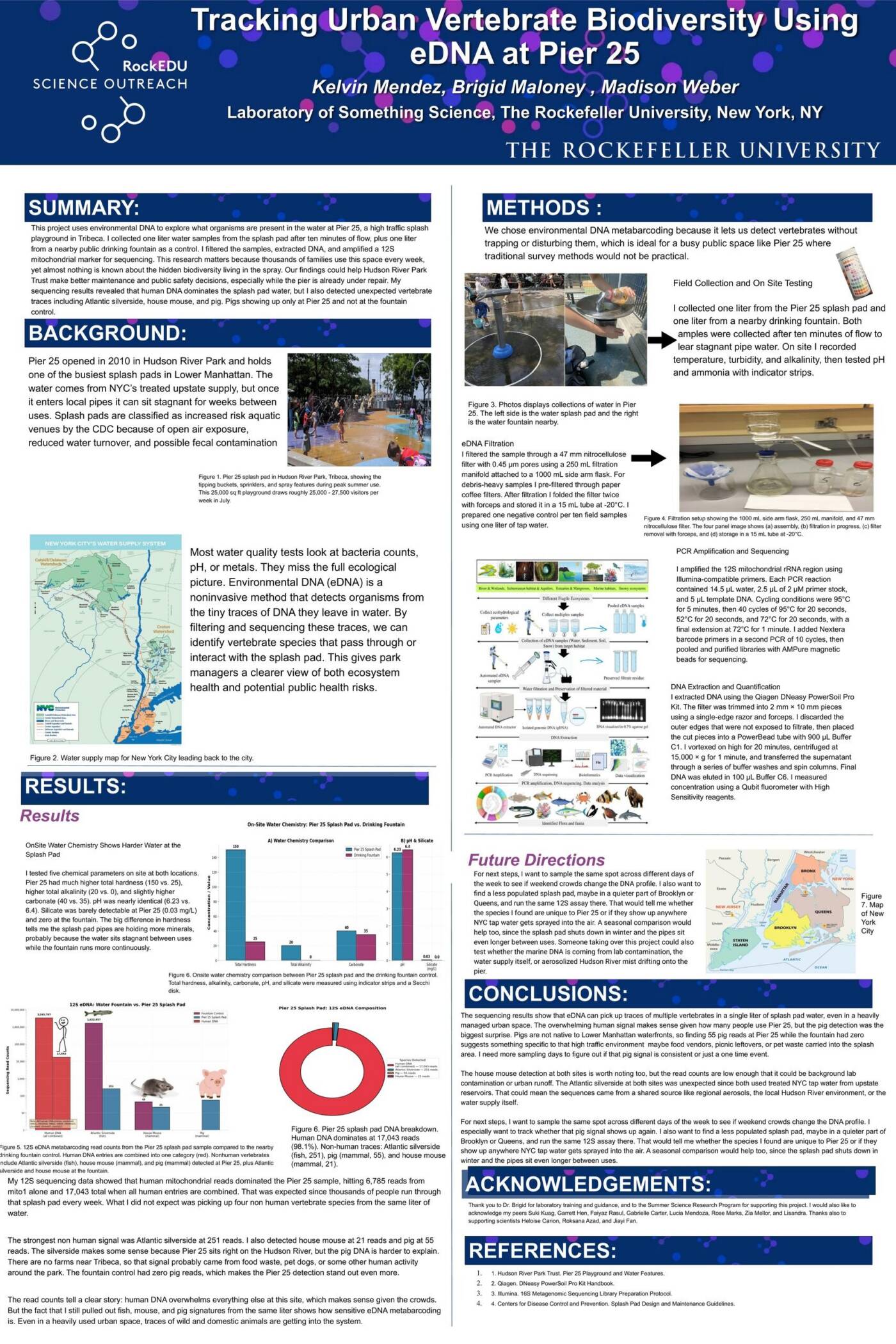
Tracking Urban Vertebrate Biodiversity Using eDNA at Pier 25
Kelvin Mendez, In-Tech Academy (Middle School/High School 368)
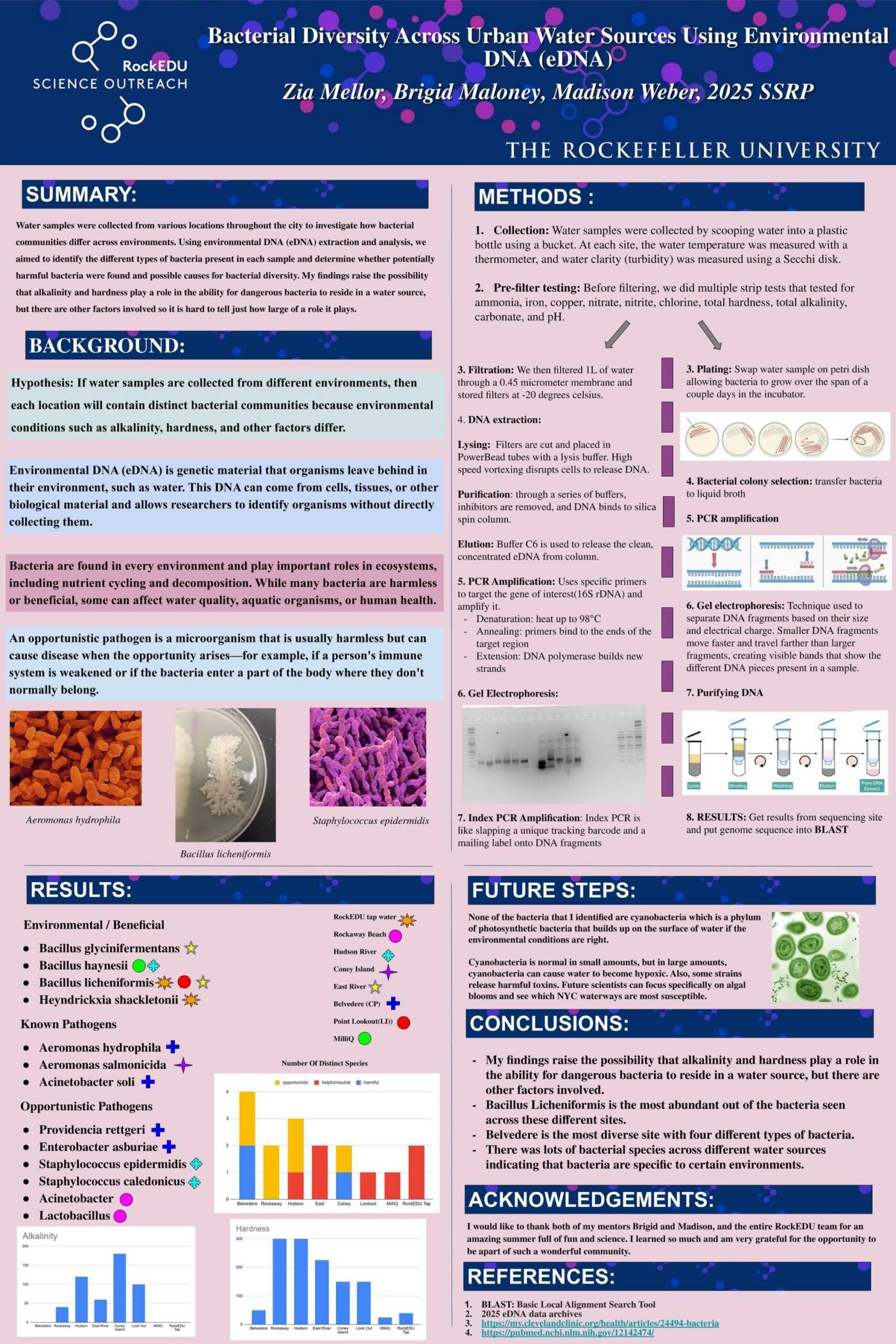
Bacterial Diversity Across Urban Water Sources Using Environmental DNA (eDNA)
Zia Mellor, Hunter Science High School
In this research group, students explored how metabolic pathways — the nutrients immune cells use for energy and how they break them down — shape immune cell behavior in health and disease, and how immune cells shift between resting, activated, and dysfunctional metabolic states. Students chose a metabolic pathway and immune cell of interest, then used pathway inhibition to study its role in immune function, culminating in a Pokémon-style battle to determine whose immune cell held up best against metabolic adversity. The Metabo-Immune Circuit: How Cells Fight, Fuel, and Fail was led by RockEDU Fellows: Ana Codo (Graduate Student, Perry Laboratory) and Nicole Walker (Graduate Student, David Laboratory).
Support Scientist Mentors
Erica Barandica, Post Baccalaureate, MSKCC, David Laboratory
Paloma Bravo, Postdoctoral Fellow, RU, Hudspeth Laboratory
Nina Magid, Graduate Student, RU, Cohen Laboratory
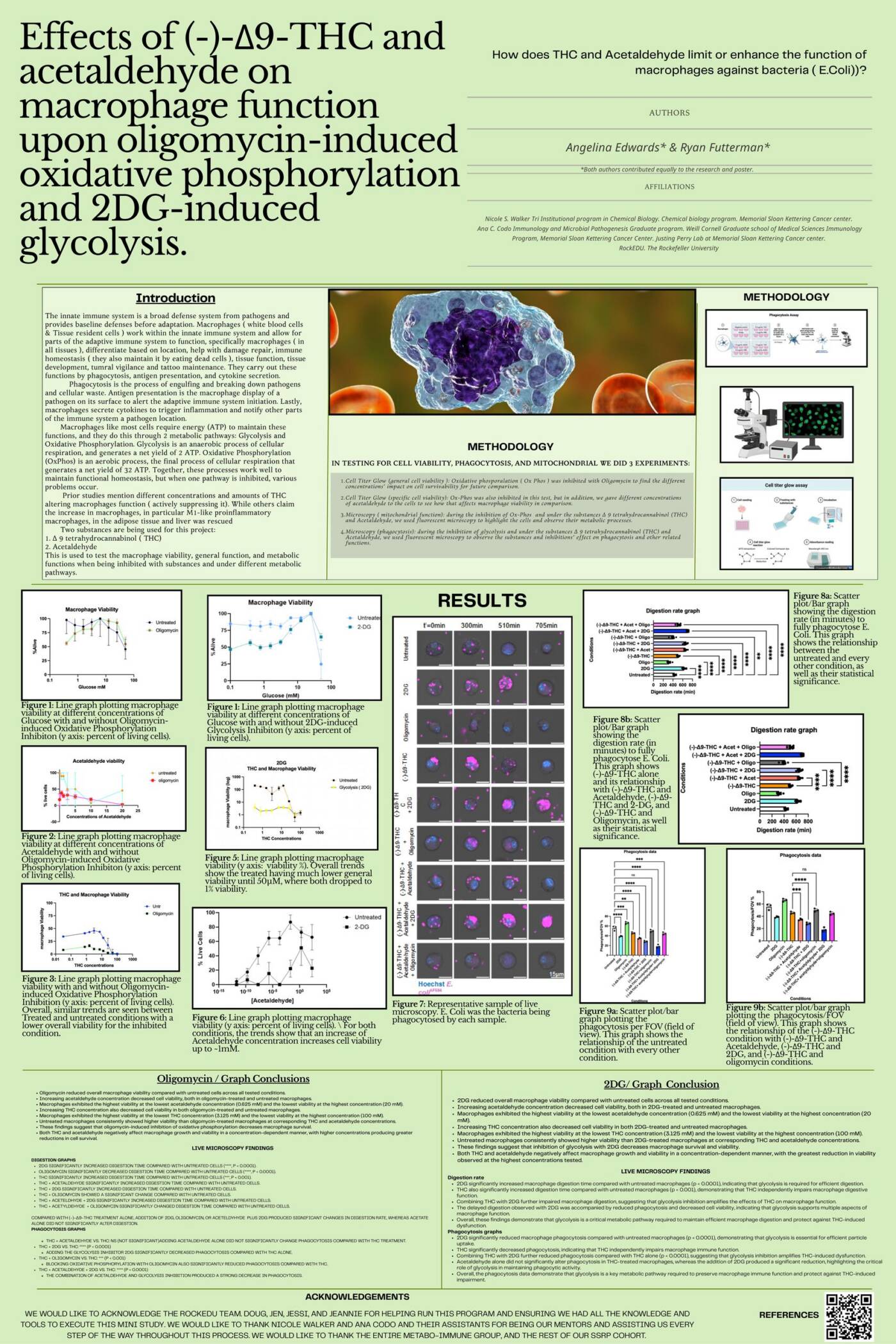
Effects of THC and acetaldehyde on macrophage function upon oligomycin-induced oxidative phosphorylation and 2DG-induced glycolysis
Angelina Edwards, Howard University
Ryan Futterman, Design Works High School
Ryan Futterman, Design Works High School
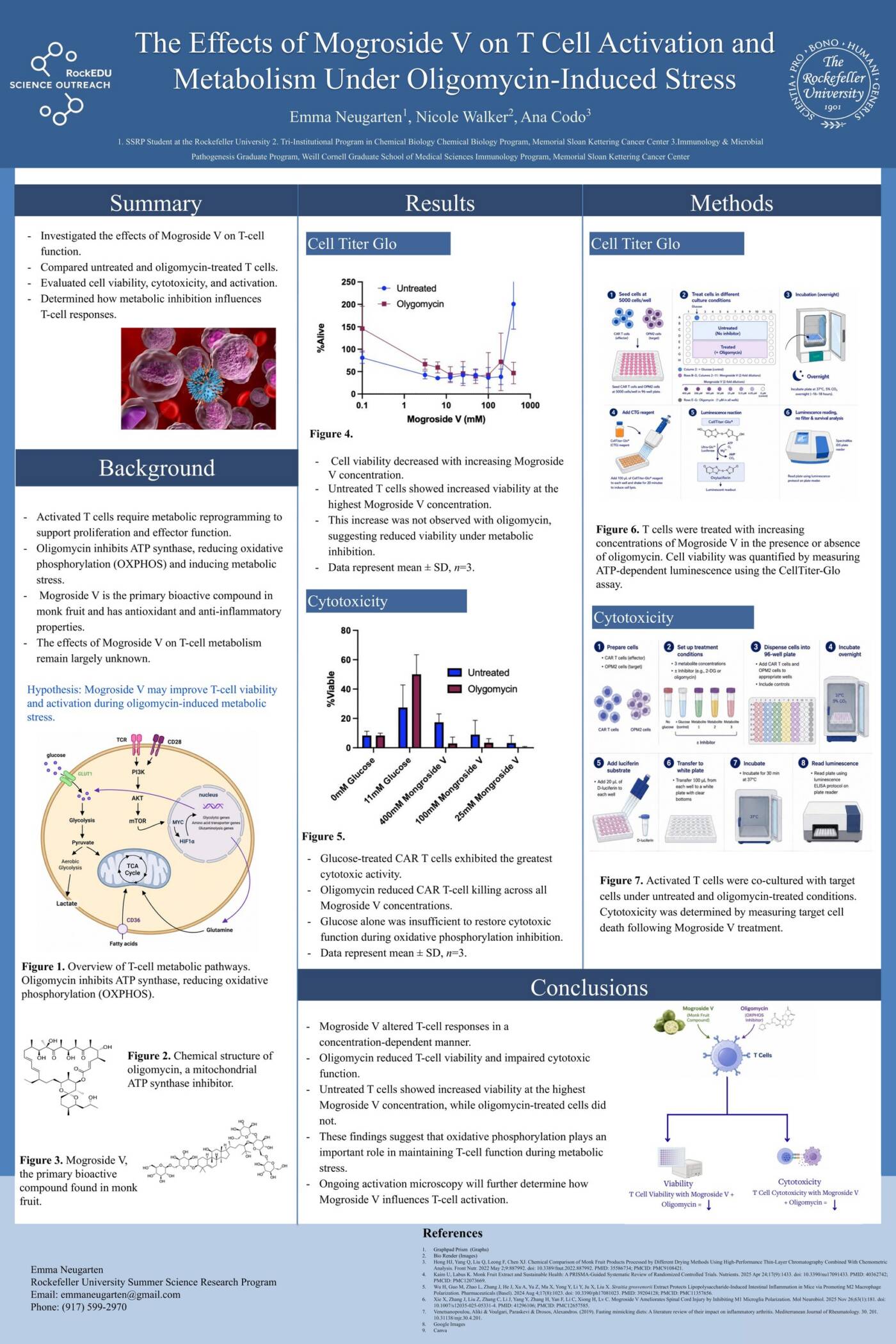
The Effects of Mogroside V on T Cell Activation and Metabolism Under Oligomycin-Induced Stress
Emma Neugarten, Riverdale Country School
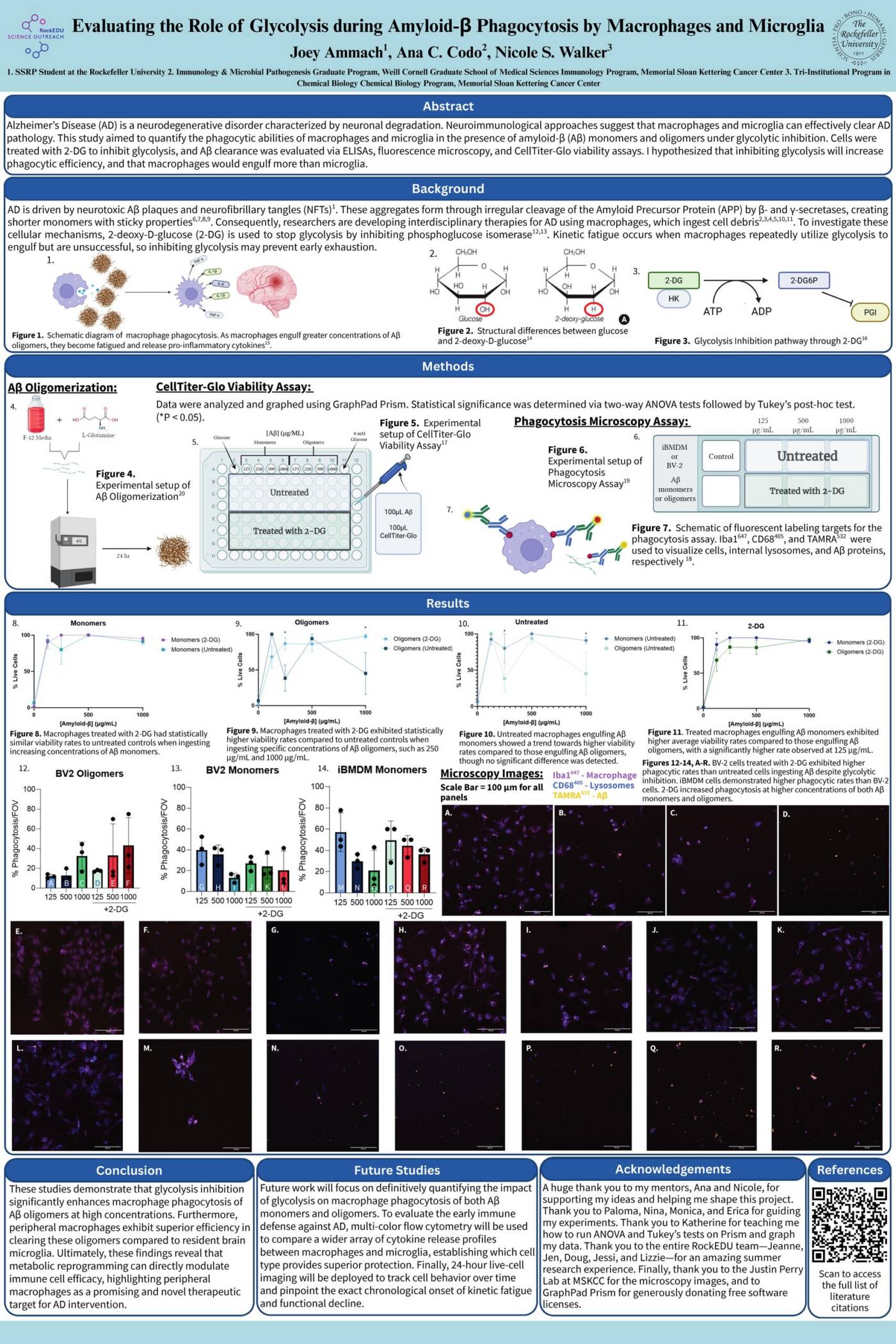
Evaluating the Role of Glycolysis during Amyloid-β Phagocytosis by Macrophages and Microglia
Joey Ammach, Johns Hopkins University
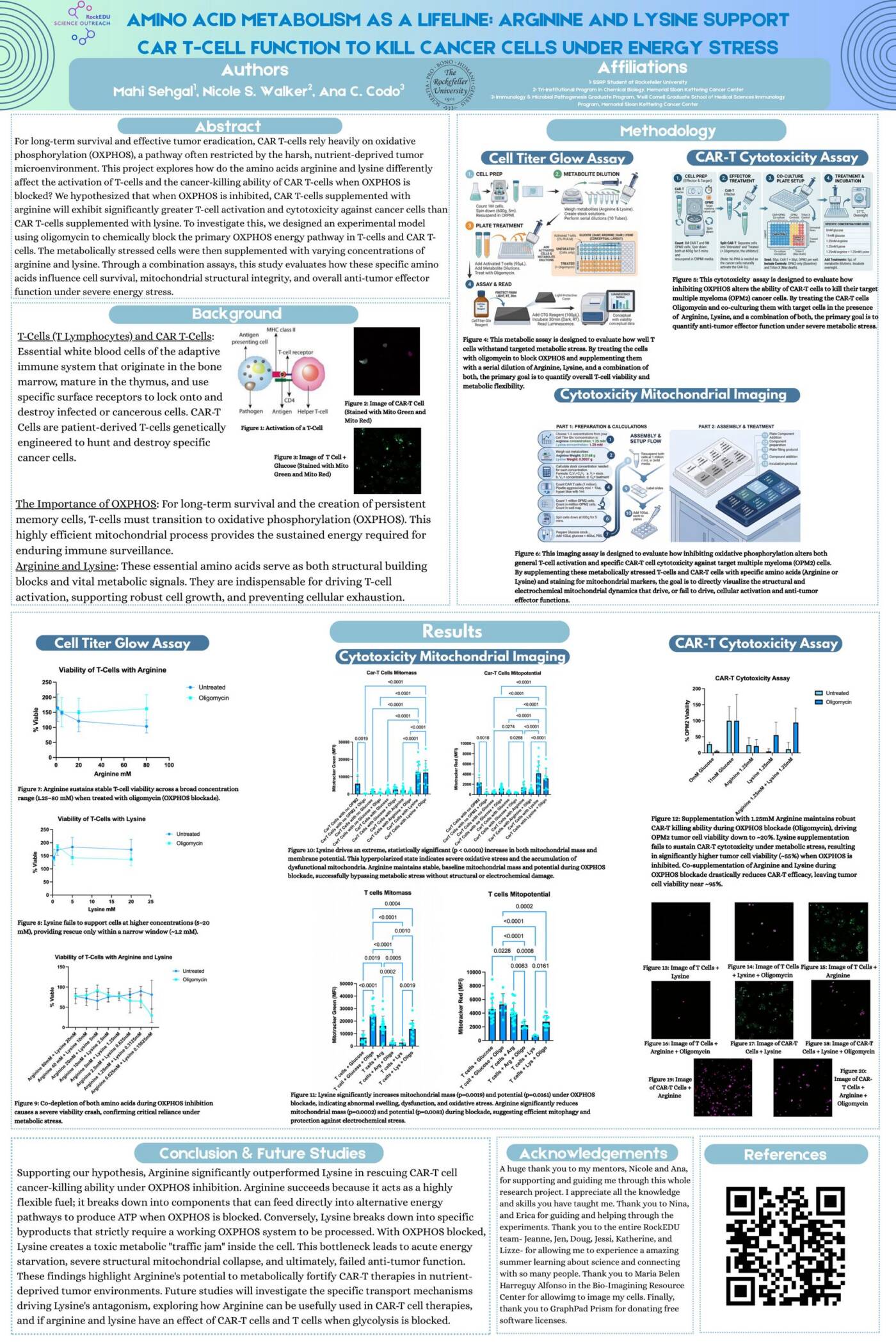
Amino Acid Metabolism as a Lifeline: Arginine and Lysine Support T-Cell Function to Kill Cancer Cells Under Energy Stress
Mahi Sehgal, Townsend Harris High School
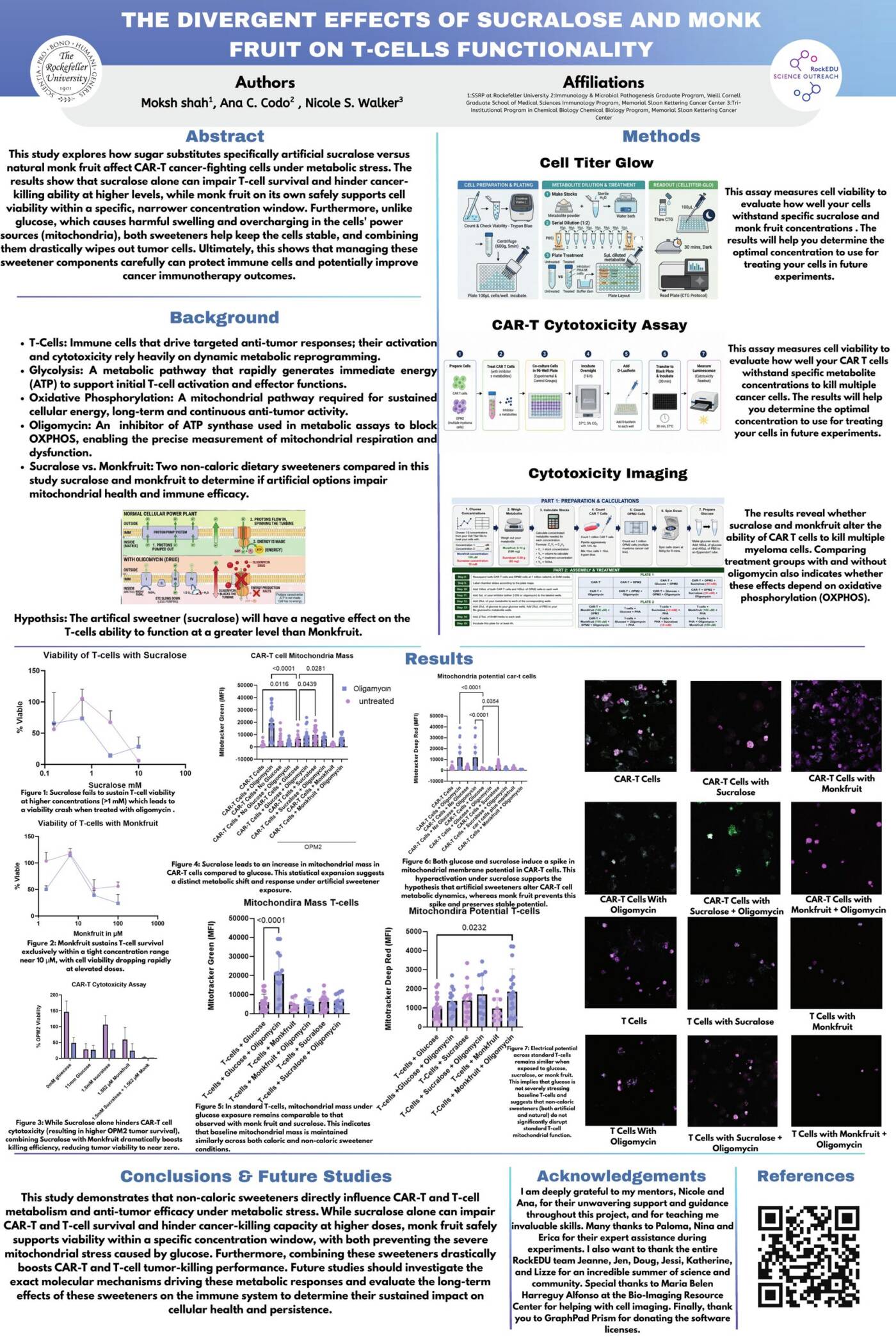
The Divergent Effects of Sucralose and Monk Fruit on T-cells functionality
Moksh Shah, Thomas A Edison Career-Technology High School
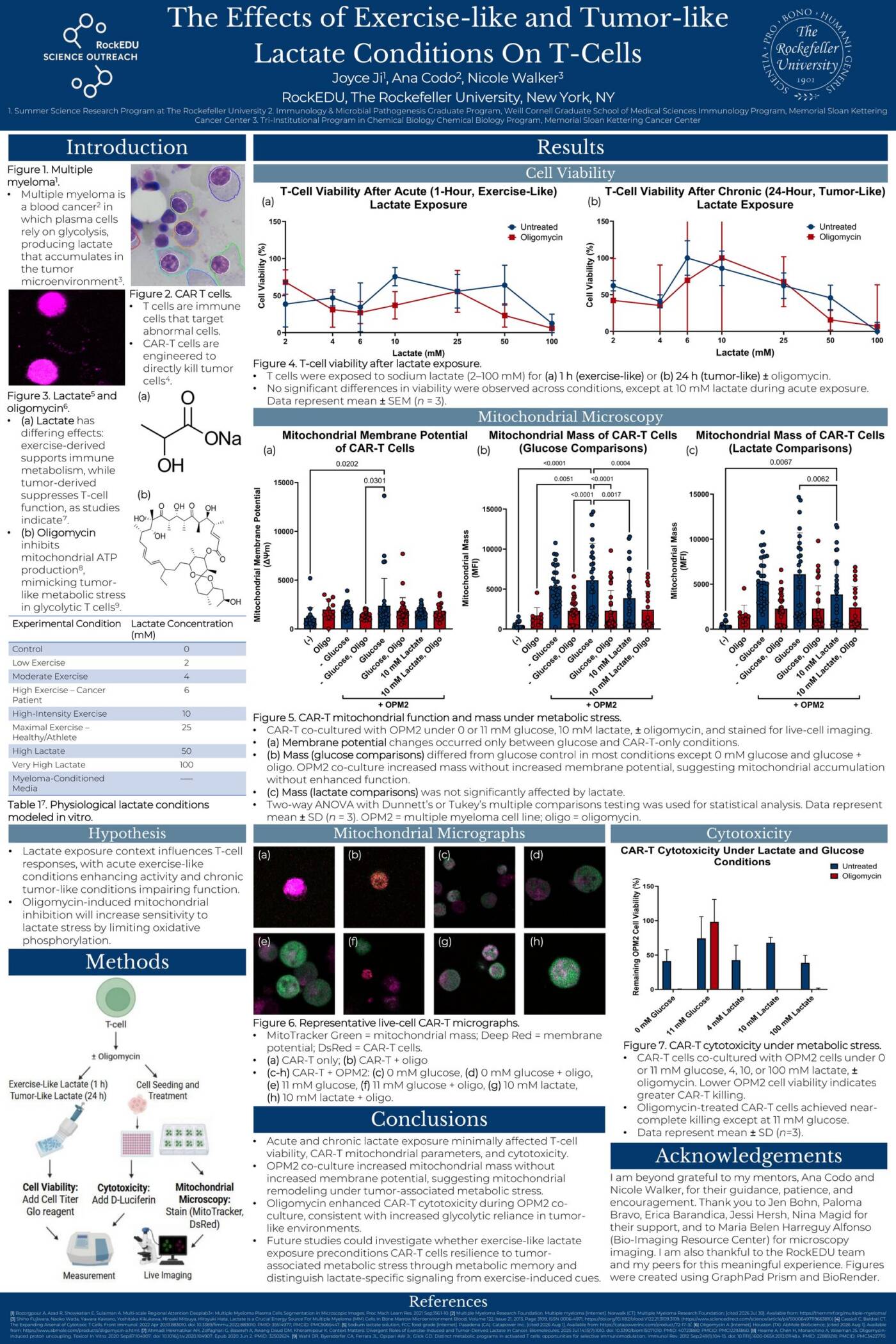
The Effects of Exercise-like and Tumor-like Lactate Conditions on T-Cells
Joyce Ji, Homeschool
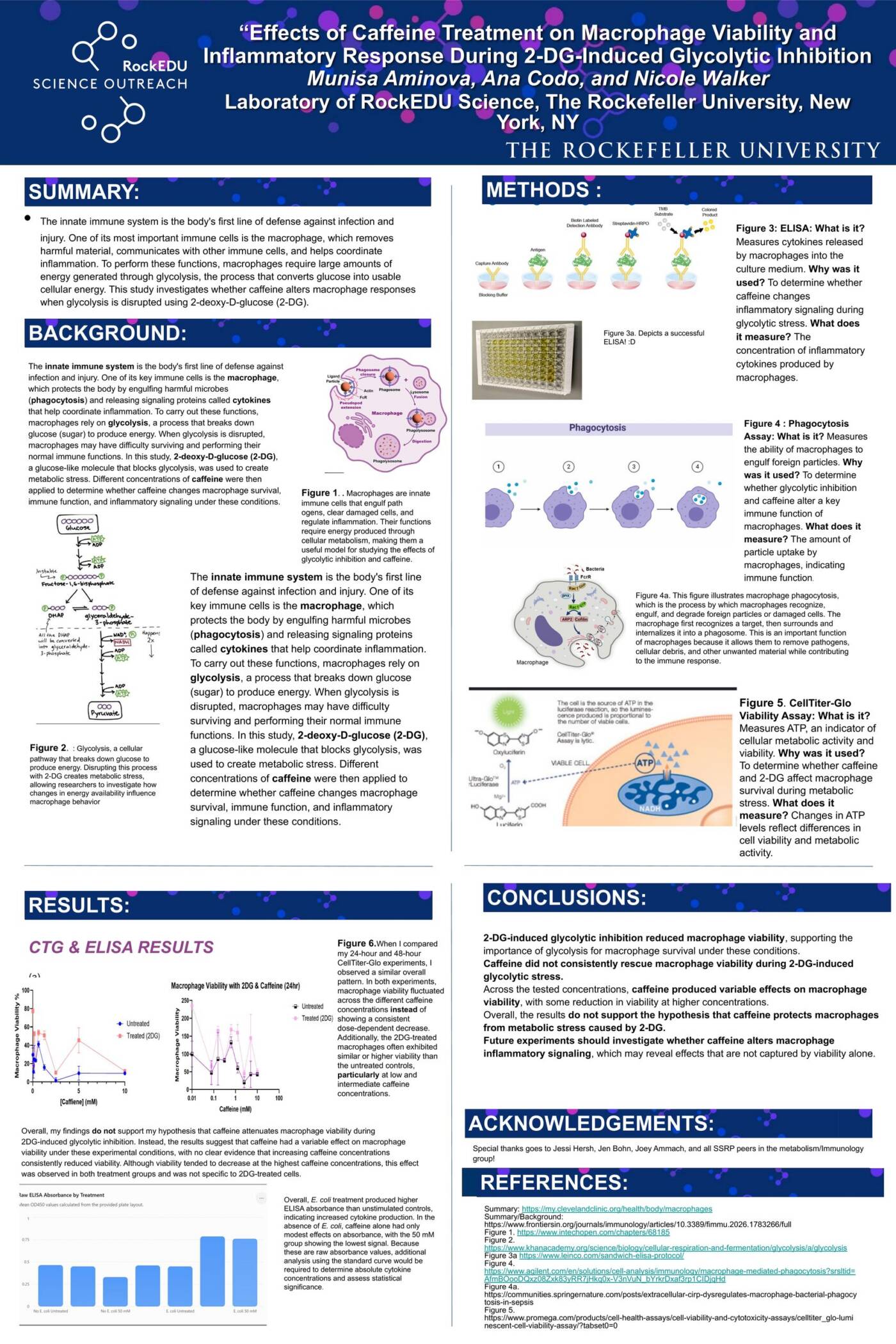
Effects of Caffeine Treatment on Macrophage Viability and Inflammatory Response During 2-DG-Induced Glycolytic Inhibition
Munisa Aminova, New Dorp High School
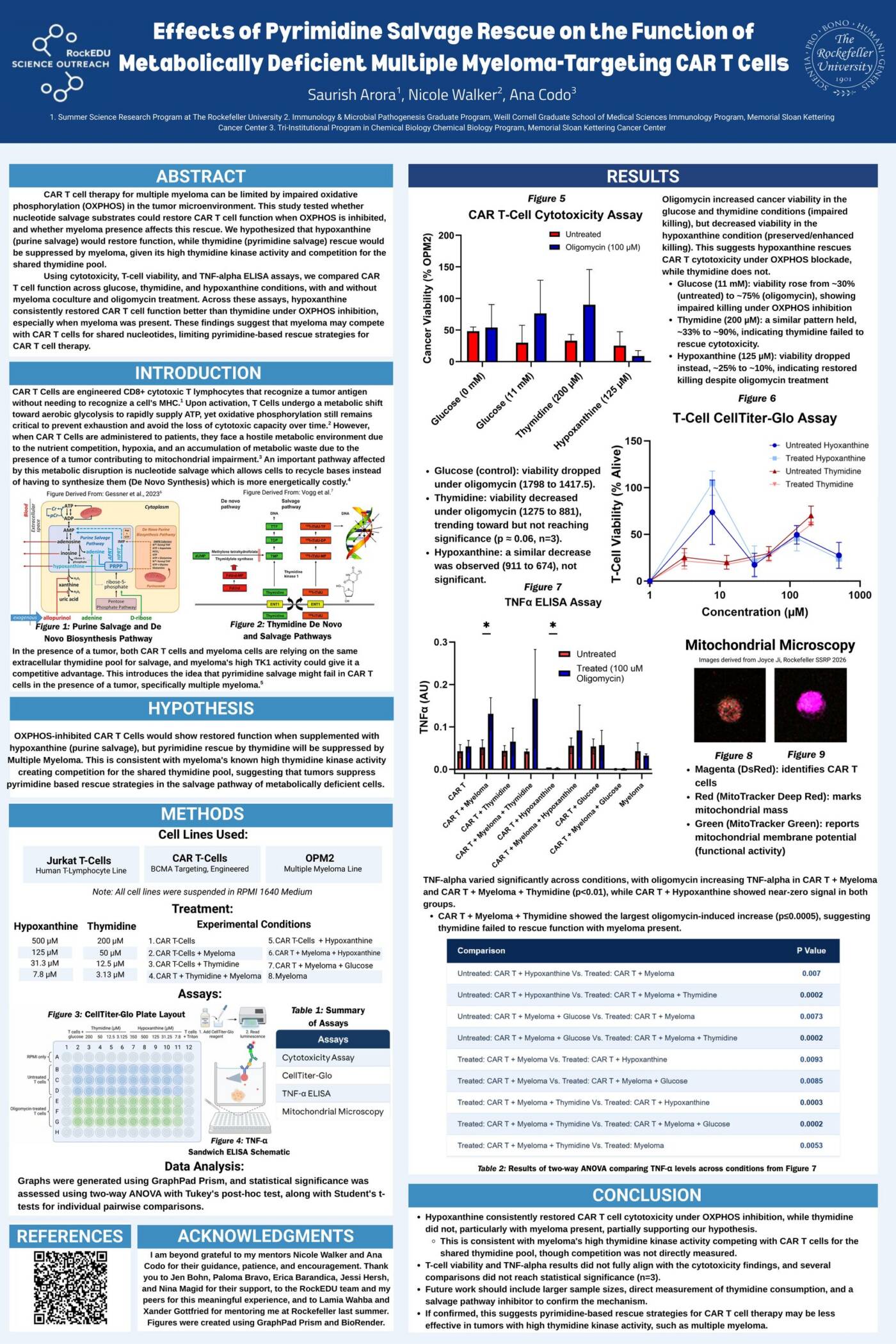
Effects of Pyrimidine Salvage Rescue on the Function of Metabolically Deficient Multiple Myeloma-Targeting CAR T Cells
Saurish Arora, Woodbridge Academy Magnet School for Allied Health and Biomedical Sciences
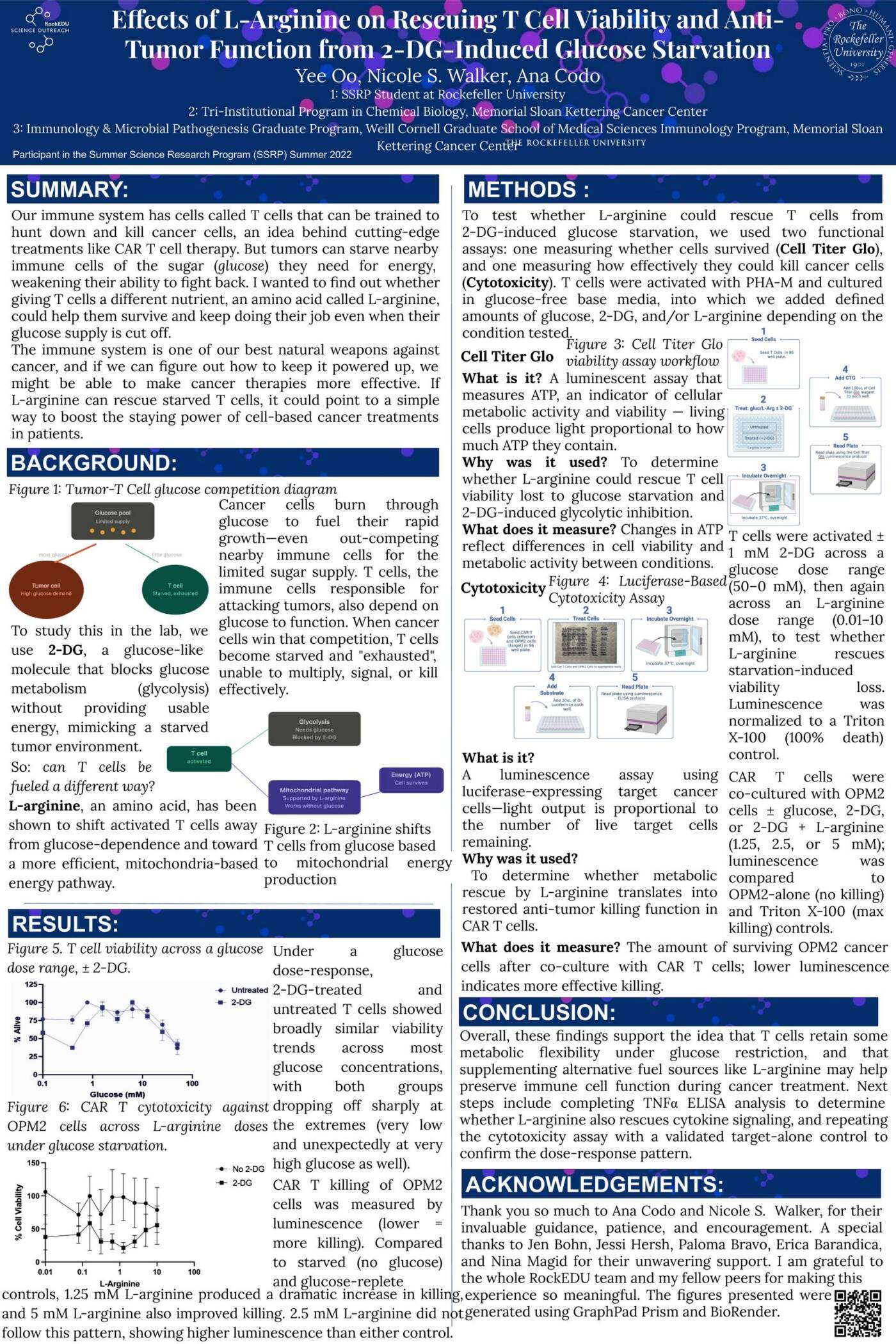
The Effects of L-Arginine on Rescuing T Cell Viability and Anti-Tumor Function from 2-DG-Induced Glucose Starvation
Yee Oo, The Brooklyn Latin School
In this research group, students became virus myth-busters, designing and performing hands-on experiments with a safe laboratory model virus system to test how everyday factors — temperature, foods and drinks, spices, and different surfaces — affect how long a virus stays stable. Inspired by pandemic-era claims, the project challenged students to separate real science from myth through experimentation. Fact or Fiction? Testing Virus Survival on Food, Spices, and Surfaces was led by RockEDU Fellows: Manivel Lodha, PhD (Postdoctoral Fellow, Bieniasz and Hatziioannou Laboratories), Sonia Jangra, PhD (Postdoctoral Fellow, Casanova Laboratory), and Sarah Foust (Graduate Student, Darnell Laboratory).
Support Scientist Mentors
Giacomo Glotzer, Graduate Student, RU, Kronauer Laboratory
Sanjhna Saravanan, Graduate Student, RU, Samie Jaffrey & Guinevere Lee Laboratories
Steph Tam, Graduate Student, WCMC, Long Laboratory
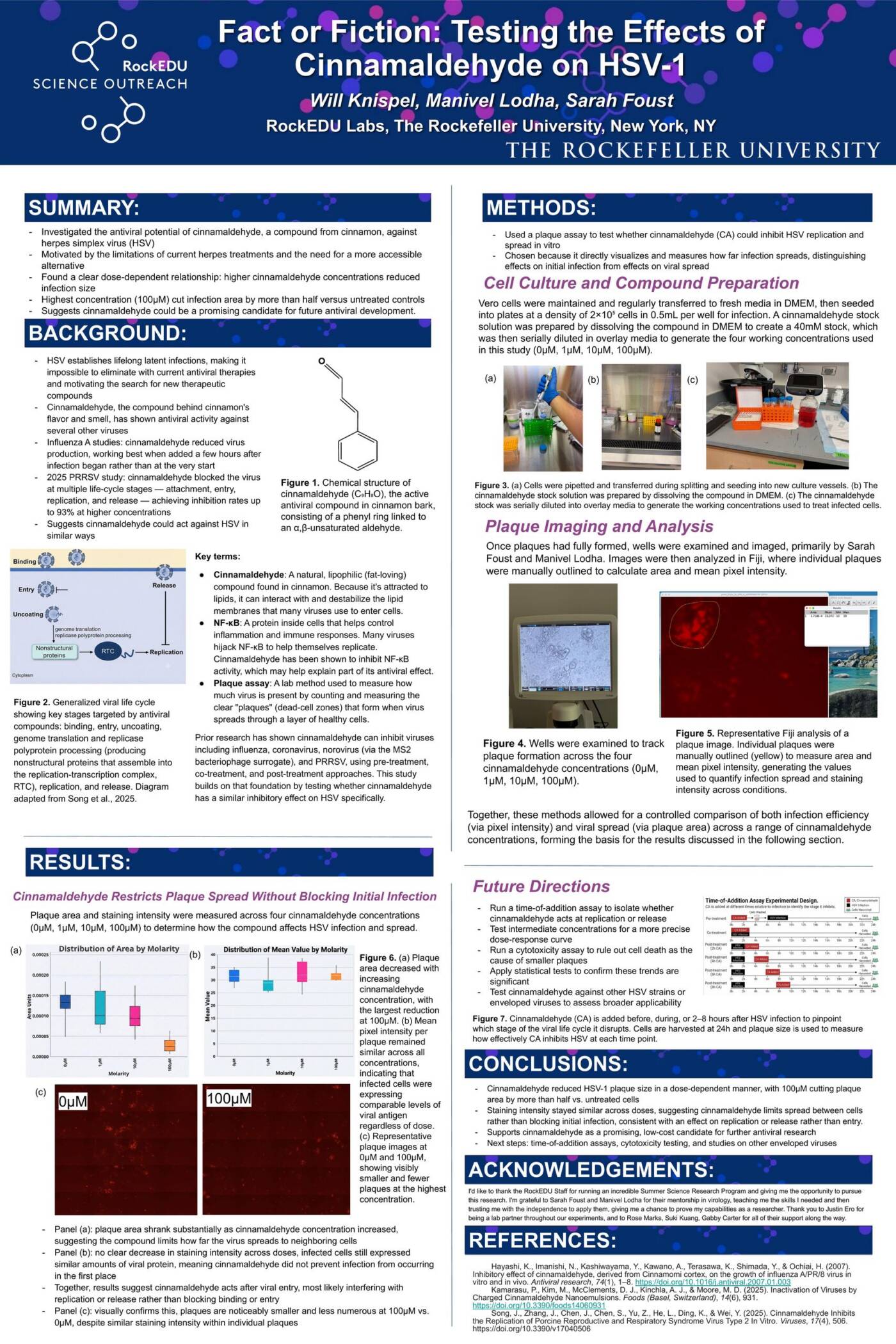
Fact or Fiction: Testing the Effects of Cinnamaldehyde on HSV-1
William Knispel, Ridgefield High School
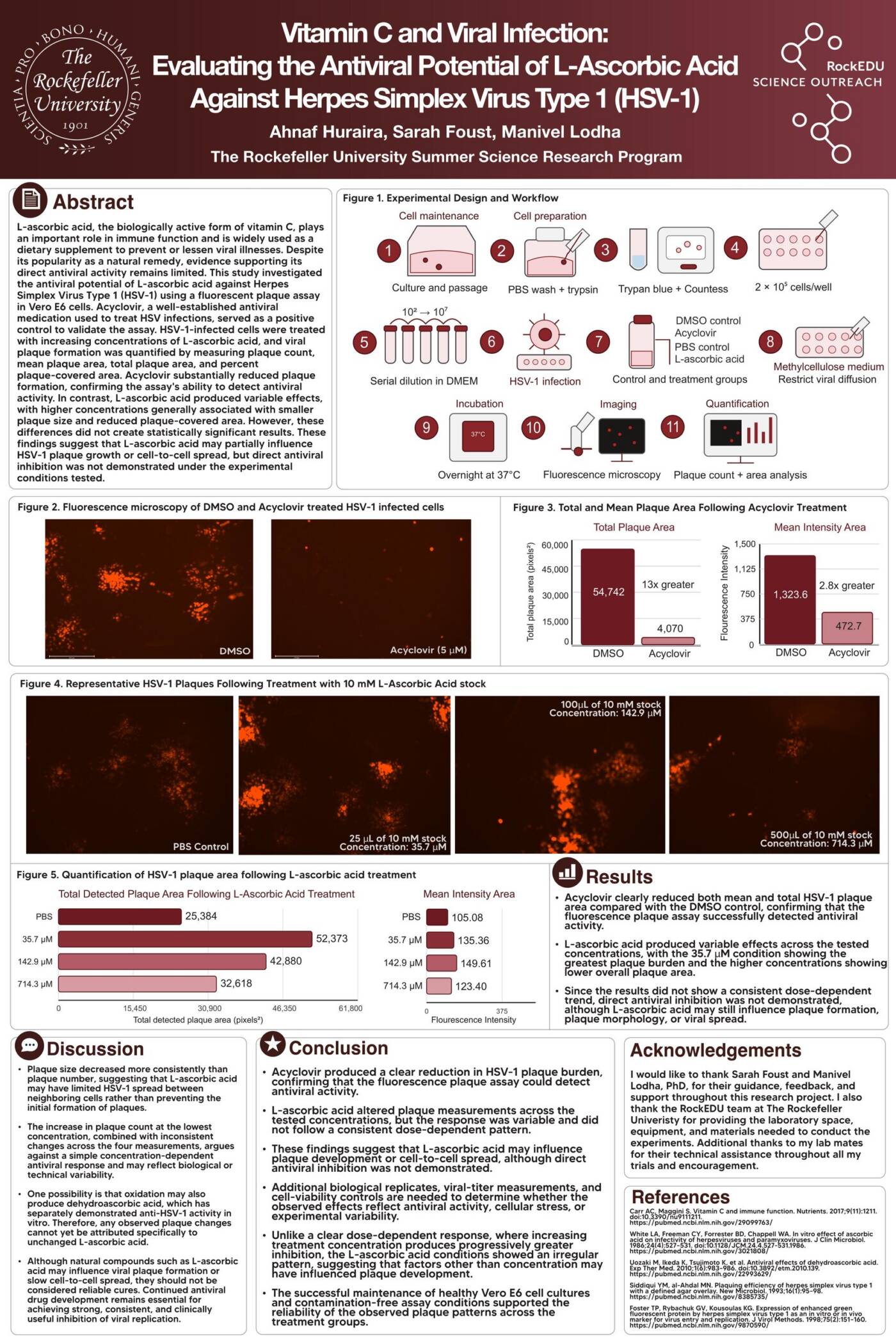
Vitamin C and Viral Infection: Evaluating the Antiviral Potential of L-Ascorbic Acid Against Herpes Simplex Virus Type 1 (HSV-1)
Ahnaf Huraira, Bard High School Early College Brooklyn
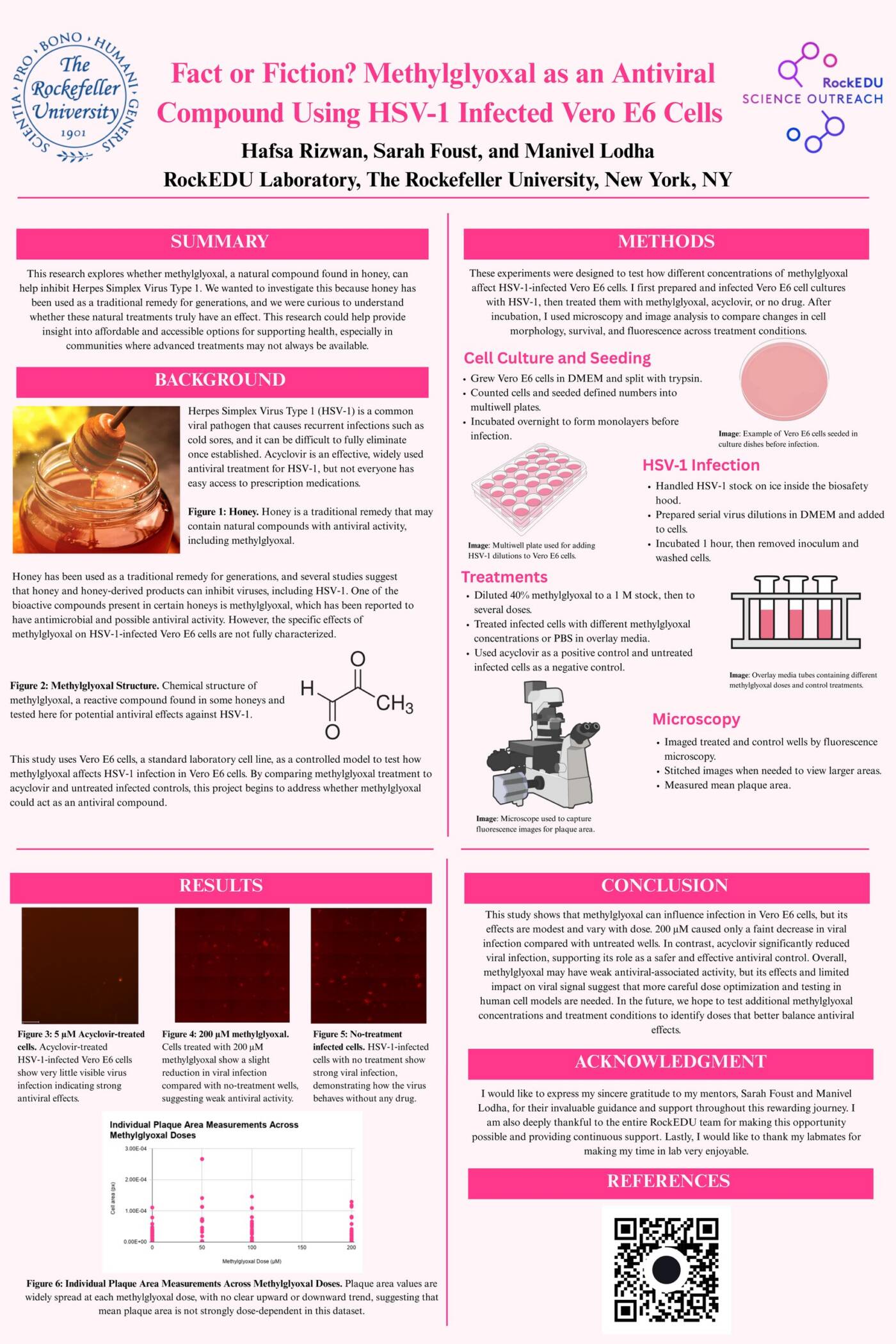
Fact or Fiction? Methylglyoxal as an Antiviral Compound Using HSV-1 Infected Vero E6 Cells
Hafsa Rizwan, Urban Assembly School for Leadership and Empowerment
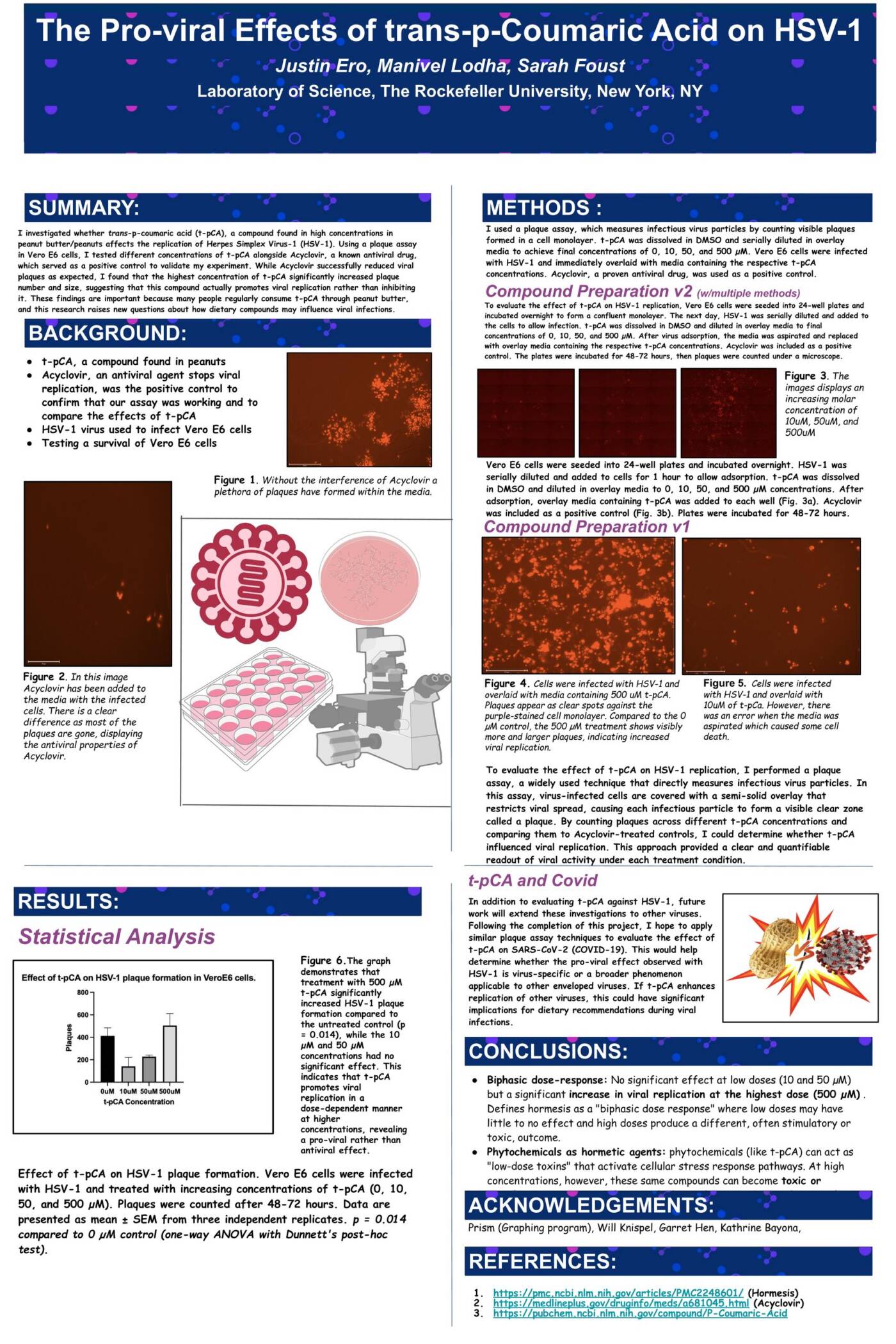
The Pro-Viral Effects of trans-p-Coumaric Acid on HSV-1
Justin Ero, Hunter College
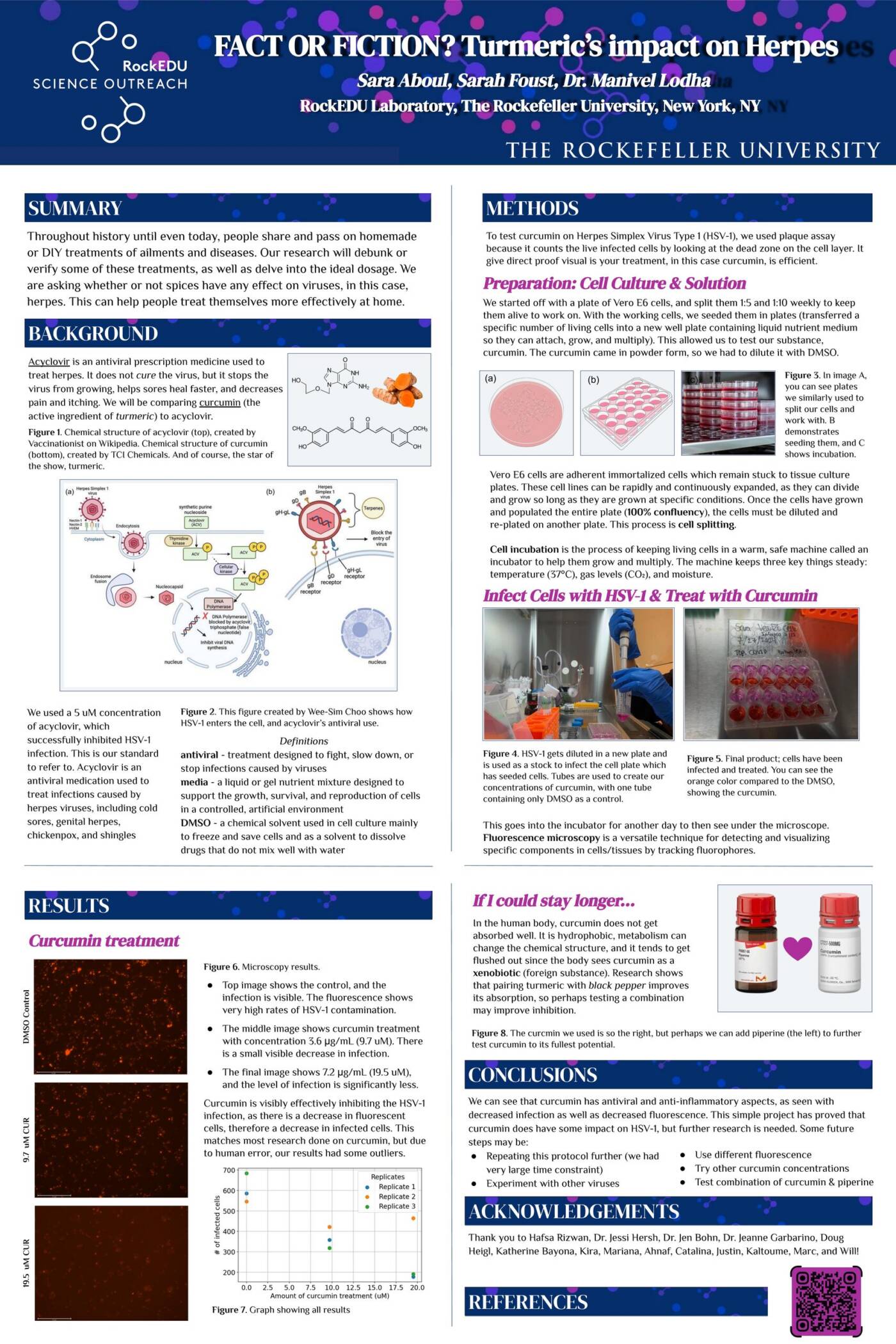
FACT OR FICTION? Turmeric’s impact on Herpes
Sara Aboul, City College of New York
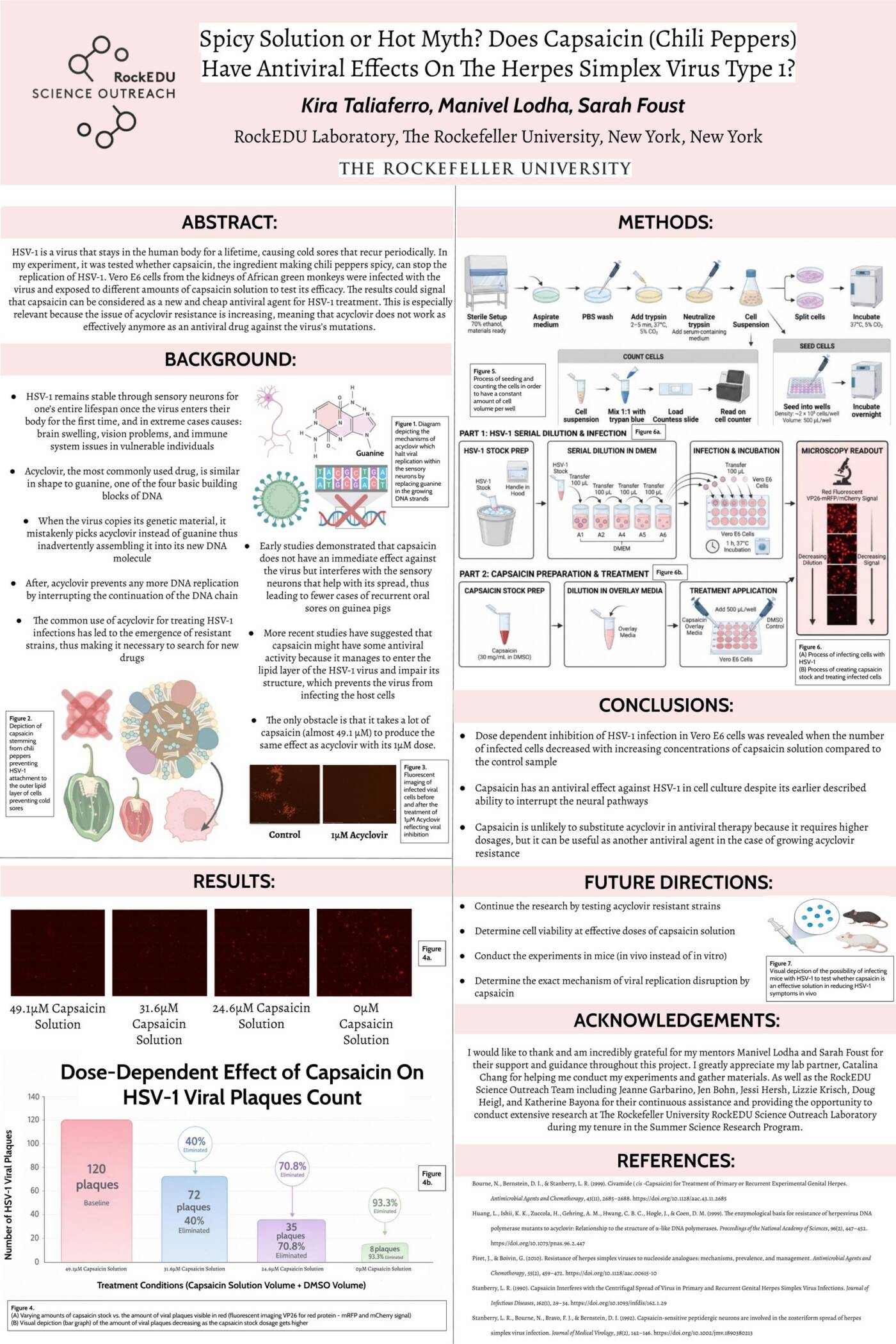
Spicy Solution or Hot Myth? Does Capsaicin (Chili Peppers) Have Antiviral Effects On The Herpes Simplex Virus Type 1?
Kira Taliaferro, Binghamton University
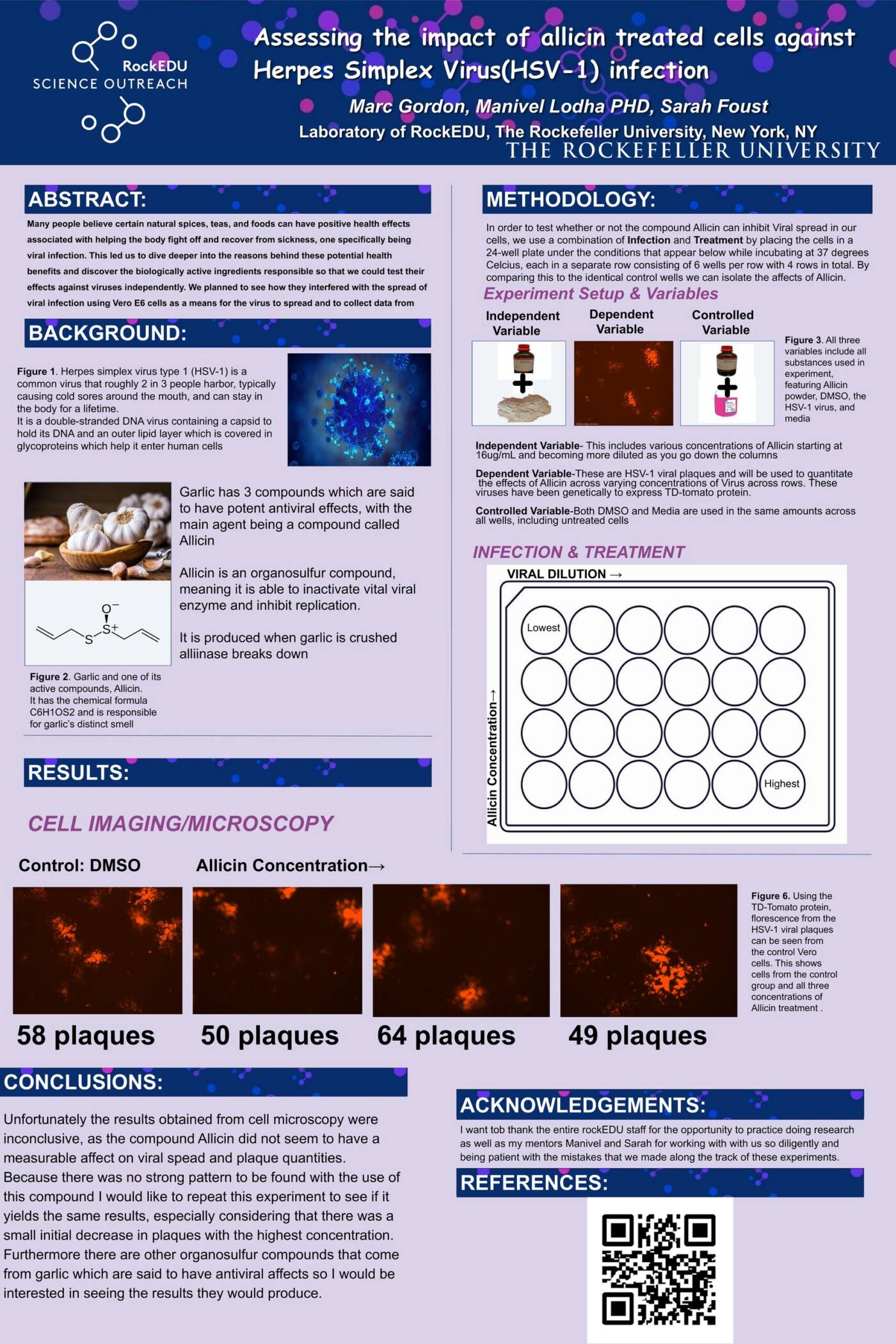
Assessing the impact of allicin treated cells against Herpes Simplex Virus(HSV-1) infection
Marc Gordon, Hunter College
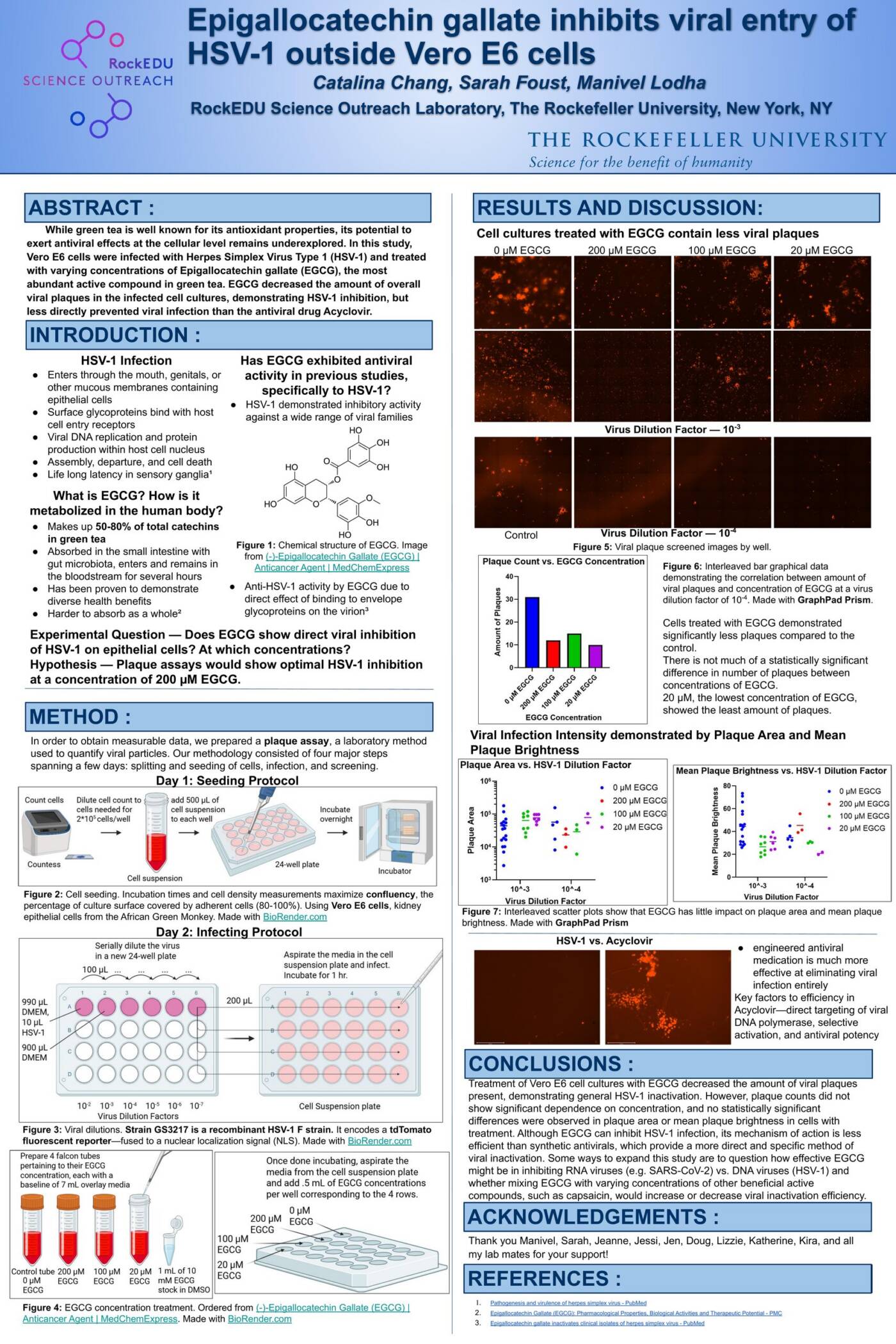
Epigallocatechin gallate inhibits viral entry of HSV-1 outside Vero E6 cells
Catalina Chang, The Geneva School of Manhattan
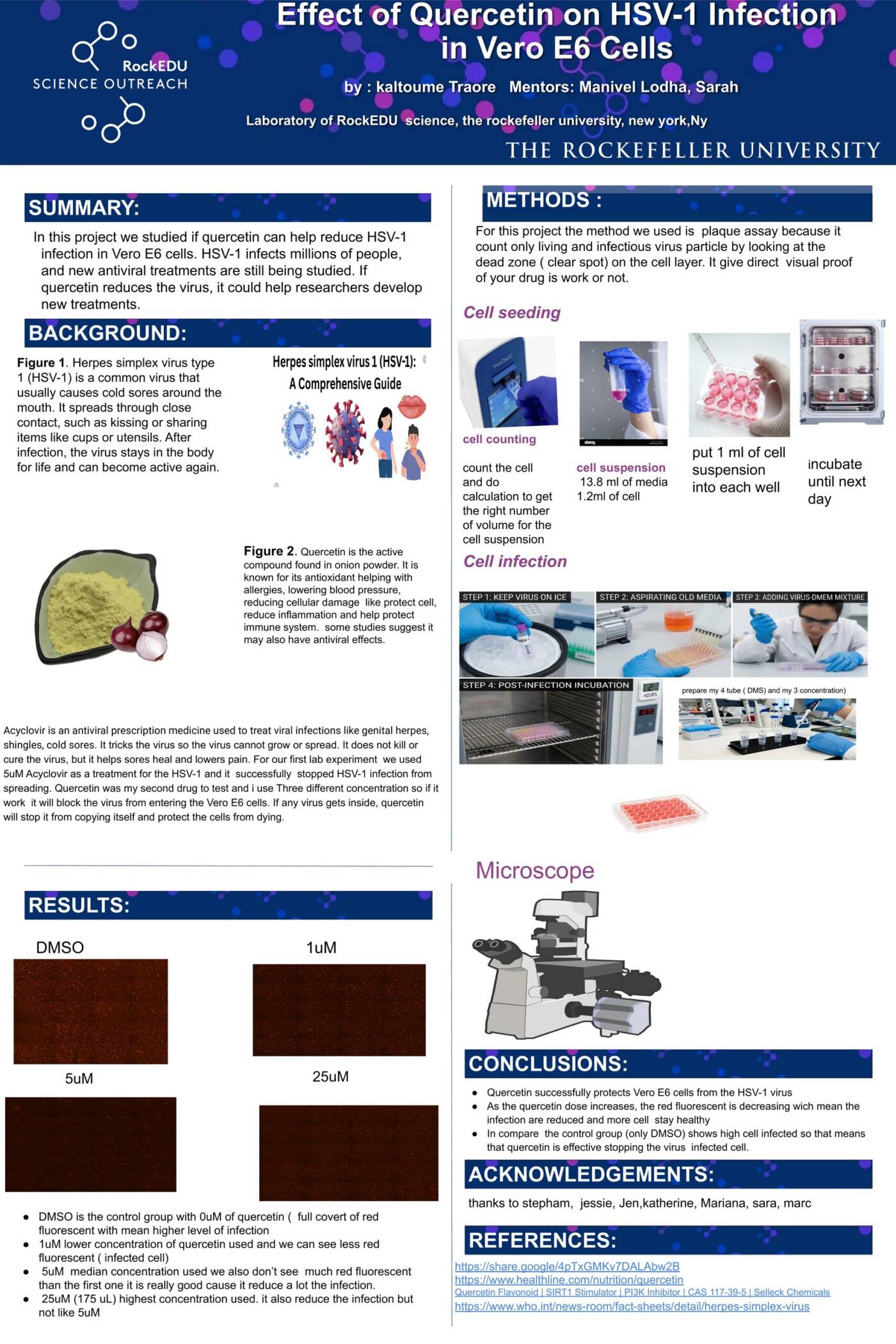
The effect of Quercetin (onion powder) on HSV-1 infection
Kaltoume Traore, International High School at Prospect Heights
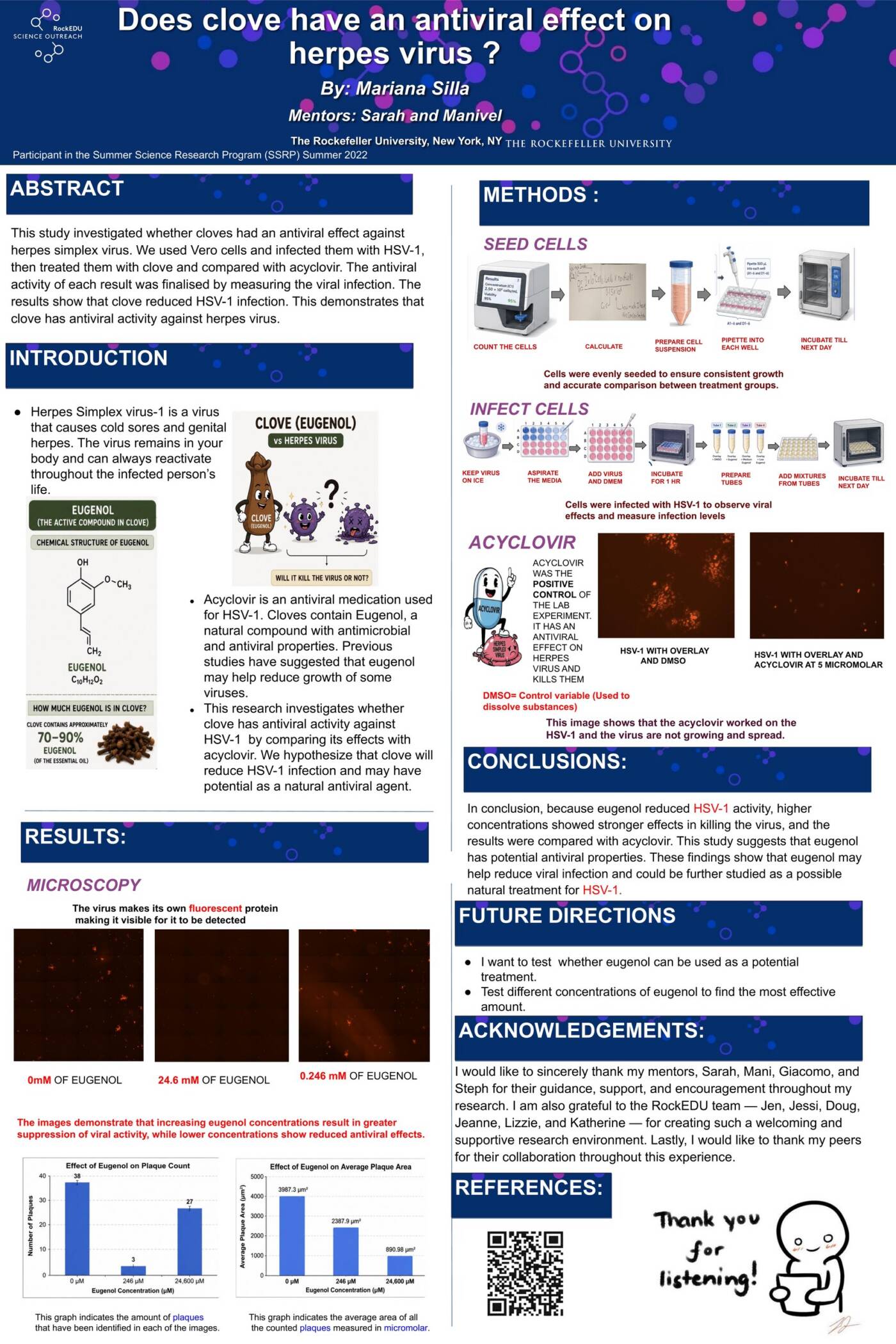
Does clove have an antiviral effect on herpes virus ?
Mariana Silla, English Language Learners and International Support Preparatory Academy (ELLIS)